Tangled: A Love-Hate Letter to Yarn Barf and Other Yarn Disasters
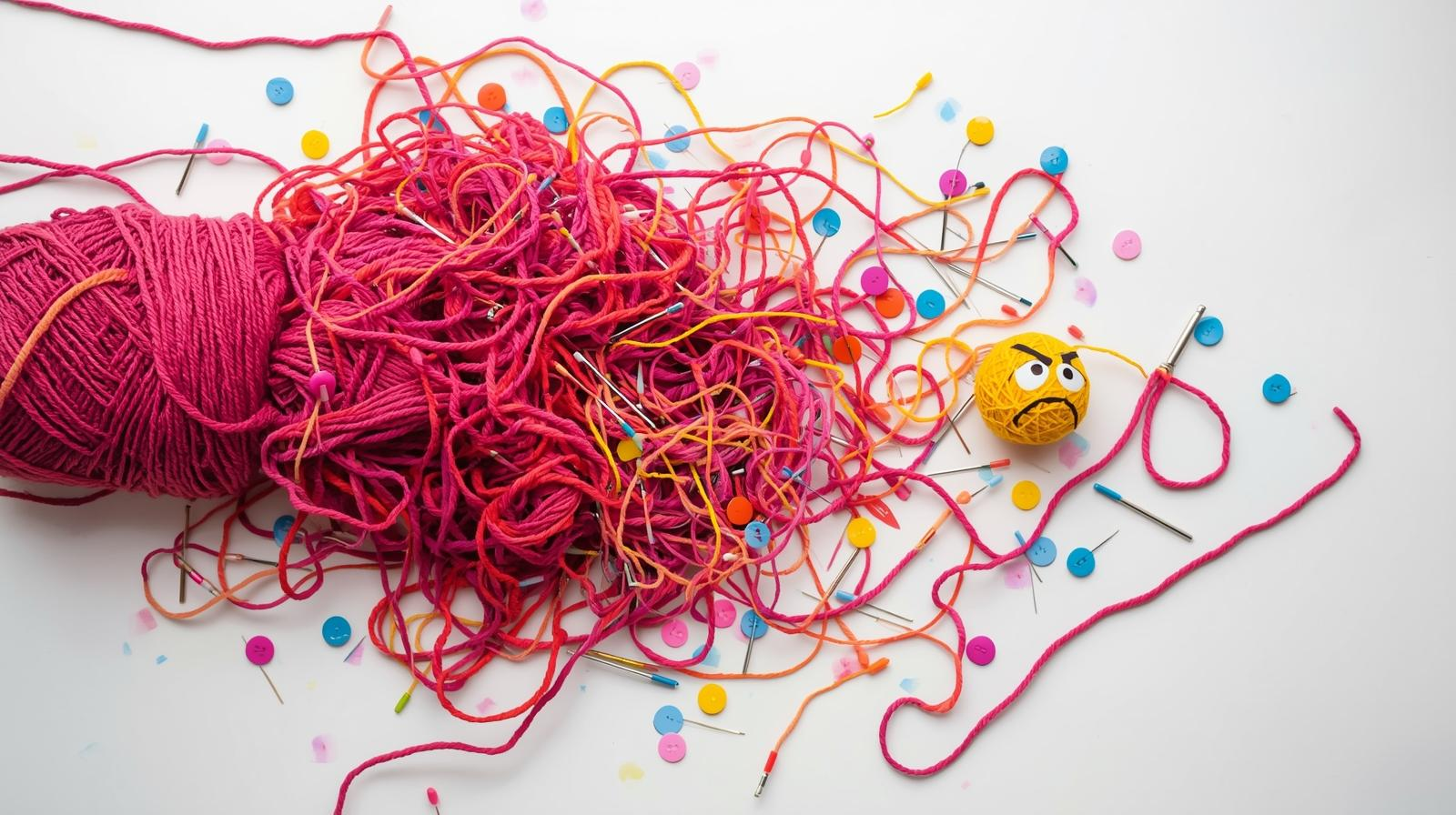
Yarn tangles and yarn barf. Let’s talk about this today. You’ve got a beautiful brand new skein of yarn. It's been sitting there so patiently, wound perfectly, full of promise. You locate the center strand, give it a gentle pull, aaaaaaaand…..out comes a yarn abomination.
A horrifying, tangled mass of yarn that looks nothing like the smooth strand you were expecting. It's got loops. It's got knots. It somehow seems to be attached to itself in twenty different places. You stand there, holding this monstrosity, wondering what you did to deserve this and whether it's too late to take up a hobby that doesn't involve yarn.
Introduction
Welcome to the world of yarn tangles. Where yarn that was literally just organized five minutes ago has somehow achieved absolute chaos. Today we're talking about yarn barf, mysterious tangles, and why our yarn seems to actively hate us. And more importantly, how to deal with it without losing our minds.
DISCLOSURE: This post contains affiliate links, meaning if you click on a product or service, and decide to purchase it, I may receive a commission at no extra cost to you. All recommended products and services are based on my experience with them. For more information, please read my Disclaimer.
Yarn Barf
Let's start with the most dramatic offender: yarn barf. If you've never experienced it, you will soon, but here's what happens:
You buy a beautiful center-pull skein. The label says it's center-pull. You trust it so you locate what appears to be the center strand and pull. Instead of a neat strand of yarn, you basically get the yarn's version of a coughed-up hairball.
It's a tangled, twisted, knotted mass that’s got loops within loops and somehow managed to twist back on itself. It defies physics and geometry. And you're just there holding it, wondering what you did in a past life to deserve this.
Why Does This Happen?
Center-pull skeins are usually wound by machines, and sometimes the center strand isn't actually on top like it should be. Sometimes it's buried. Sometimes there are two strands that look like center strands (one is a trap!). Or, sometimes the yarn gods are just feeling chaotic that day and you’re the lucky one who gets to experience it.
Did you know that the center of a wound skein is less “stable” than the outside? It's where all the tension is weakest. So when you pull from the center, you're basically asking for trouble even though it’s incredibly convenient when it does work. It's like playing yarn Jenga.
The Emotional Journey of Yarn Barf
First, there's confidence and excitement. You've found the center strand! Everything is awesome! Then…wait, why is it pulling weird? Oh no. Oh NO. Then, denial. Maybe I can just pull it through…
Then, acceptance hits. You end up convinced that you will be untangling yarn for the next twenty minutes. After 40 minutes go buy, you finally tell yourself this my life now. I am a yarn untangler. This is what I do.

Types of Tangles (And How Each One Hurts Differently)
Yarn barf isn't the only tangle out there. Yarn has many creative ways to ruin our day. Let's go through some of them:
The Yarn Barf
We covered this already. It's dramatic, immediate, and impossible to ignore. Zero out of ten, would not recommend. The only upside is that at least you know immediately that you're in trouble.
The Hidden Tangle
In my opinion, this is the worst kind. You're working along, everything's fine, and then suddenly your yarn won't pull. What the heck! Somehow there's a knot. Where did it come from? You were literally using this yarn thirty seconds ago and it was fine.
The stealth tangle appears mid-project, out of nowhere, like yarn magic but evil. It's usually small but positioned perfectly to be annoying. And it always happens when you're in a good rhythm and don't want to stop.
The Nest
You put multiple projects in your project bag that each have their own yarn ball. Or maybe you are doing a complicated project (think mosaic or tapestry crochet with multiple skeins) They're not touching and everything is neat and organized, so you zip the bag. After traveling, you then open the bag.
All three yarns have somehow woven themselves together into an elaborate “nest” that would impress a bird. Uuuugh!! They weren't even near each other! But here we are, untangling multiple skeins that are now besties who don’t wanna let go.
The Cat Special
Does this need explanation? You left your yarn out for thirty seconds. Your cat got access (by accident of course). Your yarn is now in seven different rooms, wrapped around furniture, and somehow inside your cat's collar. You KNOW the cat knew EXACTLY what it was doing. You look defeated.
Even if you don't have a cat, somehow similar chaos still finds your yarn. Dog? Same thing. Toddler? Somehow even worse. Congratulations, you have extra untangling duty.
The Mystery Knot
This one's truly unknown. You're using commercially manufactured yarn. You KNOW someone got paid to wind this yarn. And yet, somehow, there's a knot right in the middle of the strand. Not at a join point. Not where it makes sense. Just… a random knot.
Sometimes these knots are tiny and you can work through them. Sometimes they're complicated and need to be cut out. Either way, they're offensive and hurt your feelings. You paid for this yarn! Why is it knotted, it should be perfect!
The Multi-Color Chaos
When you're working with multiple colors, tangles multiply. Bobbins, yarn bowls, and organizational systems help. But sometimes chaos just wants to happen and your colors have formed an alliance and you weren’t invited.

Why Does This Keep Happening?!
Let's talk about why yarn tangles in the first place, because understanding your enemy is half the battle.
Yarn Cakes Aren't Always Your Friends
Yarn cakes are beautiful. They sit there looking so organized and professional but just because it's wound into a cake doesn't mean it's going to behave. Cakes can often be MORE likely to have issues because of how tight they are in the center.
Project Bags as Secret Tangling Chambers
Project bags are supposed to protect our work. Instead, they're apparently chaos creators. You put a neat yarn ball in there, but what comes out after transport is a tangled mess.
The Role of Tension and Movement
Every time you pull yarn, you're creating movement in the ball or cake. That movement can cause strands to move out of place. They overlap, twist, and tangle. It’s a recipe for disaster but you still pray to the yarn gods that nothing happens.
Animals (humans included)
If you have a cat and you crochet, you WILL experience cat-induced tangles. It's not IF, but WHEN. Dogs aren't innocent either. They step on it and wag their cute tails through yarn or decide your yarn ball is a toy. Toddlers see yarn and think “yes, this should be everywhere.” Even adults in your house will somehow cause tangles just by being in the same room as your yarn. “Stop looking at it, you’re making it worse!”
RELATED: Yarn Chicken: The High-Stakes Game We All Play (And How To Win)
Untangling Techniques That Actually Work
Okay, you're tangled. You're frustrated. Let's fix this.
Step 1: Stay Calm (Don't Rage-Pull)
Rage-pulling makes tangles worse. You'll tighten knots, create new tangles, and possibly break your yarn. Take three deep breaths. Put on a podcast or your comfort show. Accept that this will take a few minutes.
RELATED: Crochet As Self Care
Step 2: The Patient Finger-Combing Method
Start at the working end (the end you were pulling from) and gently trace the yarn strand through the tangle. Don't pull—just follow it with your fingers, identifying where it goes and where it's caught.
Gently lift loops over and under each other, following the natural path of the yarn. Think of it like solving a puzzle, not like attacking an enemy. Slow and gentle wins this race.
Step 3: Use Tools
Knitting needles, crochet hooks, or even chopsticks can be your friends here. Use them to:
- Lift loops apart
- Hold sections you've untangled so they don't re-tangle
- Gently tease apart tight knots
- Create space to see what's happening
A tapestry needle can help you thread yarn through tight spots. Just be gentle, you're performing surgery, not stabbing your nemesis (even though the yarn feels like your nemesis right now).
Step 4: The “Walk It Out” Technique
For big tangles, sometimes you need space. Lay the tangle on the floor or a table. Step back. Look at it from different angles. Sometimes the solution is obvious when you can see the whole thing. This works surprisingly well for larger messes.
Step 5: When To Just Cut And Rejoin
Here's your permission: if you've been working on a tangle for more than 15-20 minutes and you're not making progress, it's okay to cut it out. Your sanity is worth more than three feet of yarn.
Cut above and below the tangled section (leave yourself enough tail to weave in later). Wind up the good yarn on either side. Rejoin using your preferred method (Russian join, magic knot, or just weave in ends later, etc). Move on with your life.
RELATED: Creative Ways To Use Yarn Scraps
Step 6: Dealing With Kinked Yarn Post-Tangle
Once you've conquered the tangle, your yarn might be kinked and sad-looking. The same methods that work for frogged yarn work here:
- Gentle steam (hover your iron, don't touch the yarn)
- Hang it with slight weight to relax the fibers
- Dampen and let dry
- Wind it loosely and let it rest for a day
Most yarn bounces back pretty well. If it doesn't, remember: no one will see the kinks once it's crocheted up.
Prevention Strategies
Let's talk about preventing tangles in the first place, because an ounce of prevention is worth a pound of untangling.
Yarn Bowls: Worth It Or Hype?
Yarn bowls are ceramic or wooden bowls with a spiral slot on the side. You put your yarn ball in the bowl and thread the working yarn through the slot. The bowl keeps the yarn in place and controls the pull.
Worth it if: You work in one spot and have space for a bowl. They're great at preventing yarn from rolling away and creating tangles. They look cute on your craft table too.
Not worth it if: You move around while you work, travel with projects, or work with multiple colors at once. Also, they can be expensive and they take up space.
Verdict: Nice to have but not necessary. A regular bowl works almost as well if you just need to prevent a yarn ball from rolling away.
Project Bags With Yarn Guides
Some project bags have grommets or holes specifically designed for yarn to feed through. This keeps your yarn organized and prevents the “nest” phenomenon.
These are genuinely helpful if you travel with projects or work on multiple things. The yarn can only tangle in the way you've threaded it, which is much better than chaos-tangling itself. I personally use a bag that has guides built in. It’s very convenient.
External vs. Internal Pull
If a yarn cake or skein gives you the option, pulling from the outside is almost always safer than pulling from the center. Yes, the ball will roll around. Yes, you'll need to contain it somehow. But you're much less likely to get yarn barf from an external pull.
Center-pull is convenient when it works, but it's riskier. Choose wisely based on your risk tolerance and whether you have a cat or kids.
Winding Your Own Cakes (And Doing It Right)
If you wind your own cakes, here are the keys to preventing tangles:
- Don't wind too tight (though it still should be firm)
- Don't wind too loose (should hold its shape)
- Keep consistent tension throughout
- Use a ball winder if possible (hand-winding is hard to keep even)
- Wind it in the same direction you'll be pulling from
A well-wound cake is a thing of beauty and rarely tangles. A poorly wound cake is a disaster waiting to happen.
Managing Multiple Colors Without Chaos
When working with multiple colors:
- Keep each color in its own small bag or container
- Use yarn bobbins for small amounts
- Work from the outside of skeins when possible
- Don't let skeins touch each other if you can help it
- Accept that some tangling is will happen and plan for it
Some people clip their yarn bags to their project bag with carabiners, so each color hangs separately. I, personally, have never done this before, but it sounds genius.
The “Committed To One Project” Approach
Hot take: the best way to prevent tangles is to only work on one project at a time and keep everything organized.
No crocheter has ever successfully done this.
But in theory, if you only had one active project and kept your yarn neat and your workspace organized, tangles would be rare. In practice, we all have twelve to fifty WIPs and yarn everywhere and we're just doing our best.
RELATED: Finally Finishing Your WIPs: A Crocheter's Guide To Project Completion
When To Just Cut Your Losses (Literally)
Sometimes the tangle wins. And that's okay. You've spent twenty minutes on it. You're no closer to solving it. You're starting to feel rage toward an inanimate object. It's time.
Cut it out. Seriously. Cut above and below the tangle, salvage the good yarn, and move on. Your mental health is more important than proving you can untangle anything.
Three feet of yarn costs maybe fifty cents. Your time and sanity are worth more. Make the cut. Live to crochet another day.
Accepting Defeat With Grace
There's no shame in cutting out a tangle. Professional fiber artists do it all the time. You haven't “given up”, you've made a decision to prioritize your project over your pride.
Plus, every join is an opportunity to practice your joining techniques. Russian joins, magic knots, weaving in ends, these are all useful skills. You're not failing; you're practicing!
The Bottom Line
Tangles are inevitable. Yarn barf is a rite of passage. At some point, you will birth a yarn alien from a innocent-looking skein, and you will stand there wondering how your life led to this moment.
But you're not alone. Every crocheter deals with this. EVERY. SINGLE. ONE. The professionals, the experts, the people whose work you admire on Instagram, they all untangle yarn and experience yarn barf. They all have had moments of staring at a tangled mess and contemplating whether they should just become a painter instead.
The difference is they've made peace with it. Knowing that it's part of the process and developing skills and strategies can go a long way. They know when to fight and when to cut their losses.
And now you do too. So next time you pull that center strand and out comes chaos, take a breath. Put on a podcast. Grab your tools. You've got this. And if you don't? That's what scissors are for. (Or stuff it back in like it never happened and pull from the outside; you’ll deal with it when you get to it!)
Your Turn!
What's your worst tangling story? Have you experienced yarn barf? What's your go-to untangling method? We're all in this messy, beautiful craft together!
And if you have prevention tips that work for you, drop them below! We can all learn from each other's yarn wisdom (ehhhem….and yarn trauma).
Crochet Confessions Series
This is Part 3 of my Crochet Confessions series! Catch up on previous posts or stay tuned for what's coming:
- Part 1: Yarn Chicken – The high-stakes game we all play
- Part 2: The Art of Frogging – When your project needs a swan dive
- Part 3: Tangled ← You are here!
Coming up next in the series:
- Lost Count Syndrome: When your brain and project aren't speaking
- Second Sock Syndrome: Why finishing is the hardest part
- Oops, All Mistakes: A field guide to common crochet disasters
Don't miss future installments! Subscribe to the newsletter or follow on social media to catch each new confession. Next week we're talking about losing count, recounting seventeen times, and getting different numbers every time. If you've ever rage-counted stitches, you'll want to read it.
See you next time for counting chaos confessions!
Got a tangle type I didn't cover? A prevention method that works for you? Share it in the comments!

This is all new for me. Thanks for explaining about the types of yaan tangles.
You’re welcome, thanks for reading. Much appreciated!
This had me nodding and laughing at the same time because yarn barf is its own special kind of betrayal. You go in expecting a peaceful project and suddenly you’re wrestling a knot that looks alive. I’ve been there more times than I want to admit. The way you described it makes me feel seen. I still refuse to give up on yarn, but I definitely question my life choices every time that tangle shows up.
It really is and unfortunately it happens to ALL of us, even when we try to prevent it! Thanks for reading!
This made me laugh because yarn barf is a funny term and a universal struggle. Anyone who’s ever pulled from the center of a skein knows that moment of dread when it turns into a knotted mess. I love how you turned such a frustrating part of crafting into something so relatable and funny. Thanks for the reminder that even yarn disasters can be part of the charm!
Thanks for reading! Even the most frustrating situations with yarn can still be both funny and educational (whether we want it to be or not!)
Thanks for this🤣😂 I crotchet a lot. Well used to. I have a blanket that I started 10 years ago and never finished. Yarn cake everywhere! I took a sabbatical so I’ll have nothing but time on my hands to get back to it. So these really help.❤️
I’m glad this was helpful, thanks for reading! Keep me posted if you get back to the blanket, I’d love to see what you were working on!