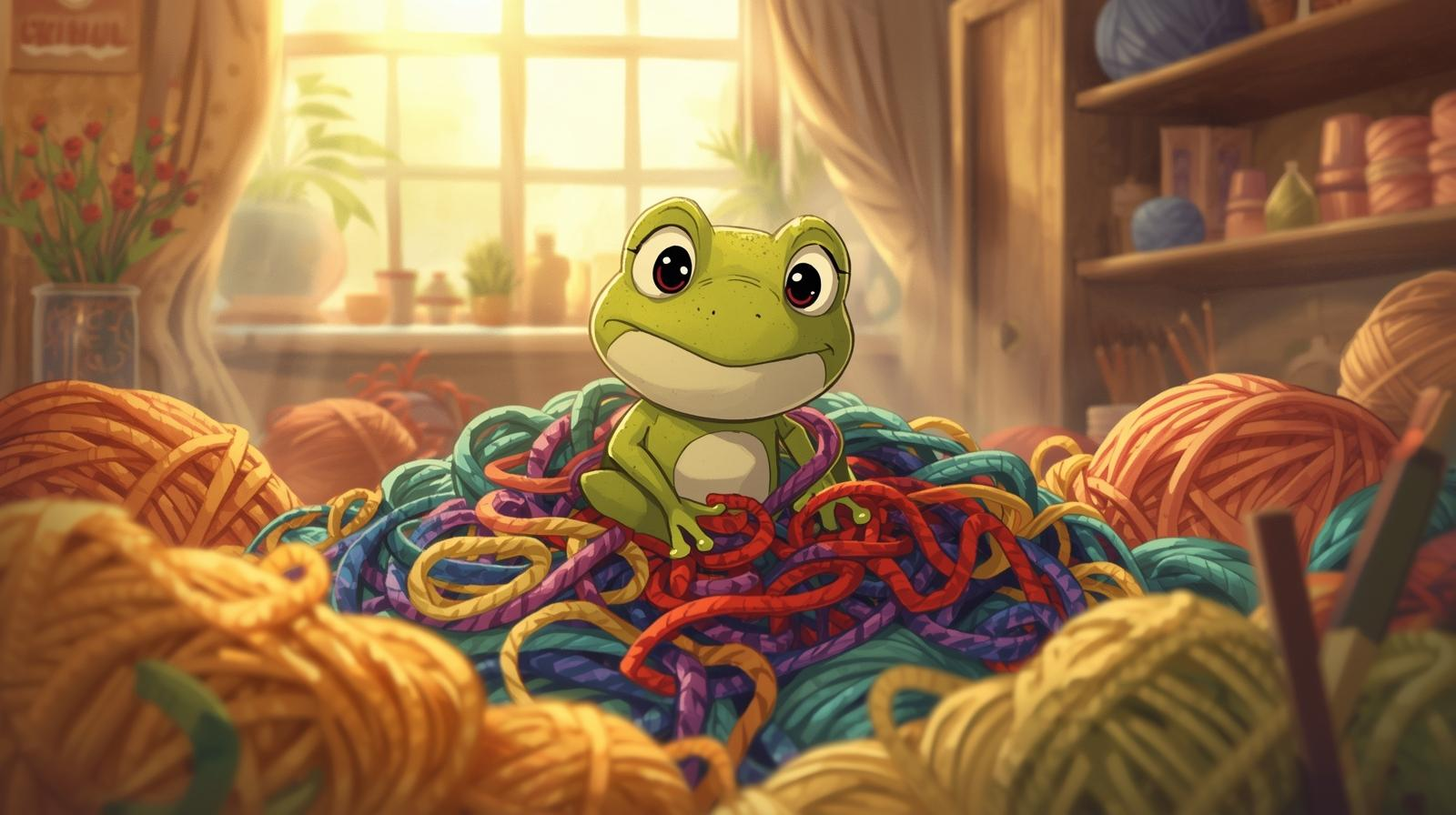
The Art of Frogging (Rip it, rip it)
My experienced yarn friends already know what this is (I can practically hear your eyes rolling from here!) but let me explain this today for the newer crafters.
You know that feeling. You're working on your project, making good progress, feeling accomplished. Then you notice it. That thing. That mistake. That miscounted row from three hours ago that's now glaringly obvious and definitely, absolutely, 100% not going to “blend in” or magically disappear. Your jaw clenches. You stare at your work with a mix of denial and dread because you know what has to happen next.
DISCLOSURE: This post contains affiliate links, meaning if you click on a product or service, and decide to purchase it, I may receive a commission at no extra cost to you. All recommended products and services are based on my experience with them. For more information, please read my Disclaimer.
What Is Frogging In Crochet?
“Frogging” is the frustrating technique of ripping apart your project, either to a certain point, or the whole dang thing. It's that special kind of heartbreak where you undo hours (or days, or weeks) of work because something went wrong. Maybe you realized that you read a pattern wrong or you missed a few stitches, but either way you know you need to go back and either fix it or start over.
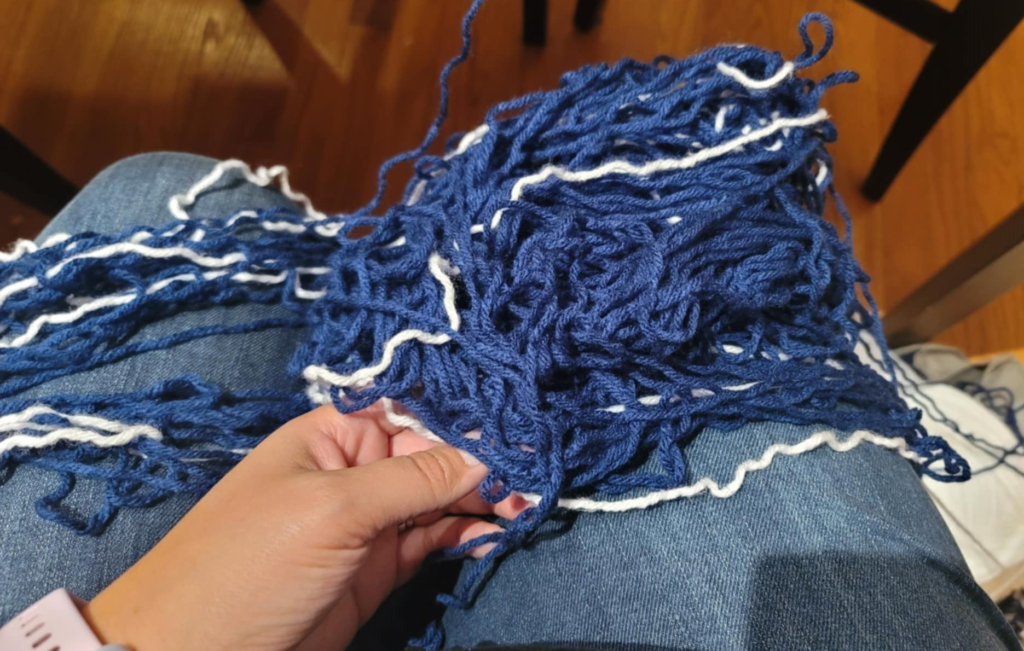
It’s even sillier how it got the name “frogging”. It came from “rip it, rip it” from needing to rip out the stitches you did. If you say that fast, it sounds like you’re saying “ribbit”…see the connection?
Let me assure you: every crocheter frogs. Every. Single. One. If someone tells you they've never frogged a project, they're either brand new or lying. So let's talk about the art of frogging, why it's actually a sign of good judgment (yes, really!), and how to do it without losing your mind or your yarn.
Frogging is not a sign that you're bad at crochet. It's a sign that you care about quality and you're willing to do what you need to do to make your project right.
The Five Stages of Frogging Grief
Before we get fully into it, let's acknowledge the emotional journey we go on because frogging is both a physical and an emotional experience. Here are the five stages:
Stage 1: Denial
“Maybe no one will notice this mistake.”
You squint at it, look at it sideways, turn it upside down. You hold it at arm's length, you ask a friend or family member (or even your crochet community) if they can see anything wrong (you know they can). Then you convince yourself that once you keep going, it'll be less obvious, so you work a few more rows, hoping the problem will somehow resolve itself. It doesn't, it gets worse. Of course it does. Uuuugh.
Stage 2: Anger
“WHY DID I CHOOSE THIS PATTERN?! WHY THIS STITCH?!”
In comes rage. You're mad at the pattern designer (even though they did nothing wrong). You may even be mad at yourself. You're mad at the yarn for being so beautiful and tempting you into this project in the first place. You consider taking up a different hobby instead, or maybe pottery, or just watching TV like everyone else, but more frustrated.
Stage 3: Bargaining
“What if I just somehow make this work?”
This is where you get creative. Maybe you can add an appliqué over the mistake, or maybe you can turn this blanket into a pillow cover? If you make the exact same mistake on the other side, it'll look intentional? Wild ideas run through your brain knowing deep down that none of them will work.
Stage 4: Avoidance
Stares at mistake for three solid days
You can't bring yourself to frog it yet, but you also can't bring yourself to keep working on it. The project sits there (it’s like it's mocking you). You hope you’ll get some eureka moment that will solve the problem, but you avoid your craft space and end up starting other projects (that you'll also eventually need to frog, but you don't know that yet).
Stage 5: Acceptance
“Okay. Let's rip it out and do this right.”
Finally, you've made peace with it. You accept that frogging is the best option. You put your hook to the side, take a deep breath, and prepare to undo hours of work. You're calm. You're centered. You take a deep breath. You're ready.

When To Frog
Not every mistake requires frogging. Sometimes you really can push through and it'll be fine. But how do you know? Here are some options that can help you decide your next steps:
Frog it if:
- The mistake is structural. If you've been decreasing when you should be increasing, or you've added/lost multiple stitches that affect the shape, you need to fix it. Structural mistakes get worse.
- You hate looking at it. Life's too short to finish a project you dislike. If the mistake bothers you every time you look at it, it'll bother you forever once it's done. Frog it.
- It won't block out. Some mistakes (uneven tension or slightly wonky stitches) can block out beautifully. Others (like being off by a whole pattern repeat) cannot. Be honest about which category yours falls into.
- You're multiple rows past it and your stitch count is off. If you can't figure out where you went wrong and your count is consistently off, frogging back to where you know it was right is much easier than trying to troubleshoot blindly.
- Your gauge changed dramatically. If the first half of your project is noticeably tighter or looser than the second half, and it's supposed to be consistent, frogging is your friend.
- You've been working on the wrong size. Made a size small when you need a medium? Yeah, that's a frog situation.
- The “I'll fix it later” has been haunting you for weeks. If you've been telling yourself you'll deal with it later for more than a week, it's time. Eat that denial and frog it. Do it now.
Push through if:
- The mistake is cosmetic and minor
- It's in a spot no one will ever see (inside of a bag, underside of a project, etc)
- You're making a practice piece and the goal is learning, not perfection
- Fixing it would require frogging more than 50% of your project and the mistake is tiny and not worth it
- The project is for yourself and you can live with it
When in doubt, step away for a few to 24 hours. If you come back and still can't unsee the mistake, frog the dang thing.
Don’t Make It Worse!
Okay, you've decided to frog. Now let's do so no new problems are created.
Step 1: Take A Deep Breath (I’m serious)
You’ve got to get yourself emotionally ready. Frogging while angry leads to rage-ripping, which can:
- Break your yarn
- Stretch your yarn in weird ways
- Make you rip out more than you meant to
- Cause you to give up on crochet entirely for weeks *face palm*
Take a few minutes. Make some tea. Put on a comfort show or calm music. Accept what must be done. Then get to work.
RELATED: Crochet As Self Care
Step 2: Secure A “Lifeline” (If You're Only Going Partway Back)
If you're frogging back to a specific row (not all the way to the beginning), put a lifeline in or a stitch marker BEFORE you start ripping so you know where to stop. Here's how:
Take a piece of smooth scrap yarn in a contrasting color. Thread it through every stitch of the row you want to save. Just weave it straight through, like you're basting in sewing. This row is now secured. When you rip out the rows above it, you can't accidentally go past this point. Genius, right?
Once you've frogged back to the lifeline, carefully remove it and continue working from that row. I’ll talk more about lifelines in a moment!
Step 3: Wind Slowly And Gently
Resist the urge to rage-rip. I know it's tempting. I know you're frustrated. But pulling aggressively can break the yarn (especially with delicate fibers) or create a tangled mess that's harder to rewind and makes you regret your life choices.
Instead, pull gently and steadily. Let the stitches unravel at their own pace. Wind the frogged yarn loosely into a ball or use a yarn winding tool as you go. Keep some tension, but not too much.
Consider using a yarn swift or ball winder. These tools help you wind evenly without overstretching the yarn.
Step 4: Dealing With Kinked Yarn
Frogged yarn often looks sad. It has retained a “memory” shape from being in stitch form, but don't panic. This can be fixed.
For most yarns, a gentle steam from your iron (hovering above, not touching) or hanging the wound ball with a small weight on it for a day or two will relax those kinks. Some people wrap the ball in a damp towel overnight. Experiment with what works for the fiber you’re using.
For really stubborn yarn, you might need to wash and re-block the yarn itself before using it again. Yeah, it's extra work. But it's worth it for yarn you want to reuse that you want to work up smoothly.
Step 5: When To Just Toss The Yarn
Sometimes frogged yarn isn't worth saving. If:
- The yarn is cheap and easily replaceable
- It's a blend that doesn't relax well after frogging
- You're emotionally done with this yarn
- It got tangled during frogging and you can't face untangling it
Just toss it, donate it, or use it for stuffing. Start fresh with new yarn. Your mental health is worth more than $5 worth of acrylic. Real talk.
RELATED: Sustainable And Eco-Friendly Yarn Practices

The Lifeline Technique
Let's talk more about lifelines because they're game-changing and not enough people use them.
What Is A Lifeline?
A lifeline is a piece of yarn threaded through a row of stitches as insurance. If you make a mistake above that row, you can rip back to the lifeline without fear. The lifeline holds all your stitches in place so you can't accidentally go too far.
When To Use Lifelines
- Before starting a complicated stitch pattern section
- Every 10-20 rows on a large project (to be safe)
- Right before you try something new or experimental
- Any time you think “I hope I don't mess this up”
- When working late at night (mistakes happen all the time when we're tired)
How To Place A Lifeline
- Get a smooth scrap yarn in a color that easily stands out
- Thread it on a tapestry needle
- Weave it through every stitch of your current row (go under both loops of each stitch)
- Leave a tail hanging out on both sides so you can find it later
- Continue crocheting as normal (the lifeline just hangs there)
When (not if) you need to frog back, rip out rows until you reach the lifeline. The stitches are all held by the lifeline, so you can't go past that point. Carefully remove the lifeline, put your stitches back on your hook, and continue from there.
Why A Lifeline Helps
Without a lifeline: “I need to go back about 15 rows… I think… oh no, I went too far… oh NO, now I can't find where I should stop…”
With a lifeline: “I'll just rip back to the lifeline. Done. Perfect. Back to work.”
It's life-changing. Start using lifelines. Your future self will thank you.
Making Peace With Frogging
Frogging isn't a failure—it's part of the process. Every experienced crocheter has frogged. I mean EVERYBODY. Some of us have frogged the same section three times before getting it right. Some of us have frogged entire garments and started over. It's normal, it's okay, and it's part of learning and growing.
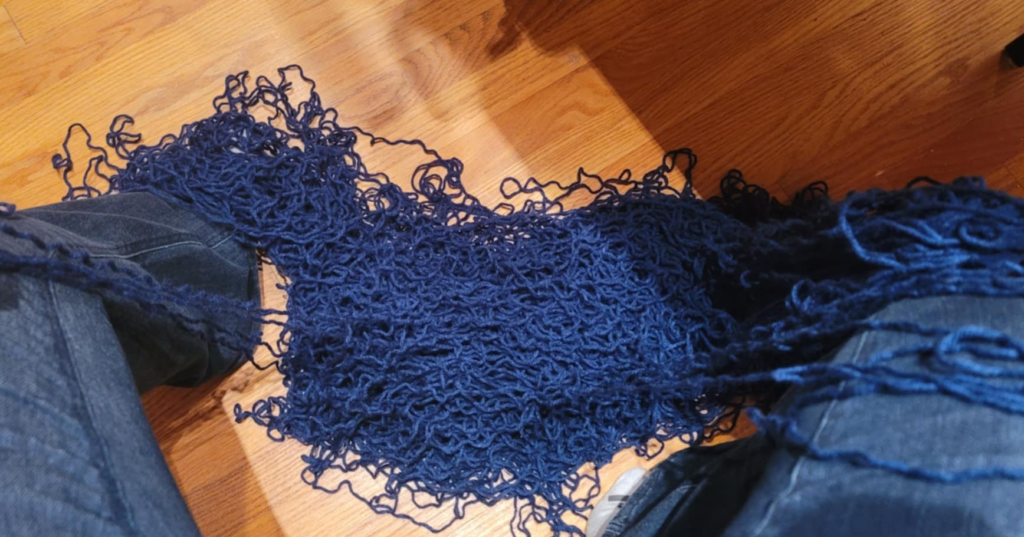
The time you spent on the rows you're frogging wasn't wasted. Think of it as practice. You were learning tension and developing muscle memory. None of that is lost when you rip out stitches. You're just reusing the yarn and keeping all the skill development.
Plus, your second attempt will be better than your first. You already know the pattern. You know where the tricky parts are and have worked through it. The redo is always faster and smoother.
My Recent Frogging Horror Story
Let me share a real frogging experience so you know this happens to everyone:
I recently was crocheting a blanket where I was following a graph. I got to the more difficult color changes about 60 rows in and realized that the color work technique I was using just wasn’t working with the colors I had for the blanket. You could see the light colors under the dark colors and vice versa as I was carrying the yarn.
I didn’t like the way it looked. Since this was going to be a gift for someone, I wanted it to look better than how it was currently looking. After doing a bunch of research and asking one of the many online crochet communities about it, I went ahead and frogged it. I gave myself a day or two to breathe and started it up again.
We frog because we care and take pride in our work. It’s a rite of passage in crochet and happens to us all. It means that we are willing to do what it takes to create something we are proud of.
When To Just Call It And Start Something New
Sometimes you need to give yourself permission to NOT finish something, especially if:
- You've frogged it three times and you're miserable
- The project has become a source of stress instead of joy
- You've learned what you needed to learn from it
- You genuinely don't like the pattern/color/yarn anymore
It's okay to frog it completely, wind the yarn back up, and start something new. Or even just set it aside for six months. Not every project needs to be finished. Some projects are purely for learning. The lesson might be “buy more yarn” or “check your gauge” or “don't start projects at midnight.” Once you've learned the lesson, you can move on without guilt.
The Bottom Line
Frogging is a skill, not a failure. Learning to frog confidently means you're never trapped in a project that's not working. You always have options. You can always start fresh.
Yes. It hurts to undo hours of work, it's frustrating, and you might cry a little (or a lot). But your redone project will be better than the messed up version. It'll be worth it.
So next time you're staring down a mistake that needs frogging, remember: every expert crocheter has been exactly where you are. Take a deep breath, secure a lifeline for next time, and rip it. You've got this.
Your Turn!
What's your biggest frogging story? How far back have you had to go? And more importantly—was it worth it in the end? Drop your frogging confessions in the comments! We're all in this together.
And if you've got frogging tips or tricks that have saved you, share them! We can all learn from each other's pain and wisdom.
Crochet Confessions Series
This is Part 2 of my Crochet Confessions series! Catch up on previous posts or stay tuned for what's coming:
- Part 1: Yarn Chicken – The high-stakes game we all play
- Part 2: The Art of Frogging ← You are here!
Coming up next in the series:
- Tangled: A love-hate letter to yarn barf and other disasters
- Lost Count Syndrome: When your brain and project aren't speaking
- Second Sock Syndrome: Why finishing is the hardest part
- Oops, All Mistakes: A field guide to common crochet disasters
Don't miss future posts! Subscribe to the newsletter or follow on social media to catch each new confession. Next week we're diving into yarn tangles, yarn barf, and why our yarn seems to hate us. Trust me, you'll want to read it!
See you next time for tangled yarn confessions!
Have a specific crochet disaster you want me to cover in this series? Let me know in the comments!

Haha, “frogging” always makes me laugh! I can totally relate to the mix of frustration and relief when you finally rip back a project and start fresh. I do it often!
I loved how clearly you explained what “frogging” is — the bit about rip‑it, rip‑it sounding like a frog croak actually made me laugh. This gives me a whole new appreciation for the patience it takes to crochet correctly.