Lost Count Syndrome
When Your Brain and Your Project Are Fighting
You're counting stitches across your current row. “…45, 46, 47, 48.” Wait. Was that 48 or 49? Better start over. “1, 2, 3, 4…” You hear something in the other room or was it outside? You lose your place. Start again. “1, 2, 3…” This time you make it to 46. FORTY-SIX. You counted 48 last time. How is it 46 now? Uuuugh!
Sitting back, you stare at your project and wonder if math is even real or if you've been living a lie this whole time because this math ain’t mathing!
Welcome to Lost Count Syndrome. It's not an official medical diagnosis (yet), but it should be. It's that frustrating experience where you count the same row multiple times and get a different number every single time.
Today we're talking about why we lose count, why it's so rage-inducing, and most importantly, how to actually keep track of what we're doing without losing our minds.
DISCLOSURE: This post contains affiliate links, meaning if you click on a product or service, and decide to purchase it, I may receive a commission at no extra cost to you. All recommended products and services are based on my experience with them. For more information, please read my Disclaimer.
What Is Lost Count Syndrome?
Lost Count Syndrome is the universal crocheter or knitter experience of not being able to keep track of your stitches or rows. It appears in several ways:
- Counting the same row multiple times and getting different answers
- Having no idea which row you're on (was it 8 or 10?)
- Recounting so many times you no longer trust numbers as a thing
- Forgetting which stitch you started counting from
- Getting interrupted mid-count and having to start completely over
It affects beginners and experts alike; no one can escape it. You could have all the educational degrees in the world and you'll still count your crochet stitches wrong.
Why We Lose Count
First, let's establish something important: losing count doesn't mean you're bad at crochet or math. Your brain is actually doing something incredibly complicated and sometimes wires get crossed. Here are some reasons why:
Our Brains Are Multitasking Constantly
When you crochet, you're simultaneously:
- Counting stitches
- Maintaining muscle memory for the stitch pattern
- Reading the pattern or remembering what comes next
- Controlling tension
- Watching where your hook goes
- Maybe listening to music or a podcast
- Possibly having thoughts about literally anything else
That's a LOT of mental load and that's not even all of the other distractions happening around you that your brain processes while trying to focus on your current task. Your brain occasionally messes up, and counting is often the first to go because it requires active focus and attention while everything else becomes automatic.
Distractions Are Everywhere
Someone talks to you mid-count. Instant loss of count. You have to start over.
Your phone buzzes. You glance at it for a split second. Suddenly you're at 34 but you don't remember counting past 28.
Your cat jumps on your lap. Your dog barks. A car horn honks outside. You have a random intrusive thought about that embarrassing thing you said in 2013. Your count is gone. Poof!
Repetitive Counting Is Genuinely Hard
Human brains aren't great at this because repetitive tasks, like counting, are boring. After the 30th stitch, your brain starts to wander off.
This is why counting out loud helps some people. It creates a sound related memory in addition to the mental count. But then someone hears you muttering numbers and asks what you're doing. You answer and boom, you've lost count again.
Fatigue And Stress Make It Worse
Tired brain = lost count. Stressed brain = lost count. Late-night crocheting after a long day? You're basically guaranteeing you'll lose count multiple times.
Your brain has a limited amount of executive function available (a set of mental skills that help you accomplish goals), and when you're tired or stressed, counting becomes harder. This is why you can count just fine in the morning but by 10 PM you can't remember what number comes after 37.
Sometimes The Pattern Is Confusing
Lets be real: sometimes it's not you, it's the pattern. If the pattern says things like “work in established pattern” without clearly explaining what that means, or uses abbreviations inconsistently, or is just poorly written, you're going to have a harder time tracking where you are.
Unclear patterns make you second-guess yourself, which makes you recount more, which makes you more confused, which makes you recount AGAIN (this time in frustration). It's a vicious cycle.
Rage-Inducing Scenarios We All Know
Let's go over some of the counting disasters that make us want to yeet our projects across the room:
Someone Talks To You Mid-Count
Talking about the ultimate betrayal! You're at 43, focused, doing great. And then:
“Hey, what do you want for dinner?”
And just like that, your count is GONE. What number were you on? You don't know anymore and have to start over, and now you're annoyed at both your project AND the person who dared to speak to you while you were counting. Neither a death glare or a specific “I'M COUNTING RIGHT NOW” hand signal prevents this disaster.

Counting The Same Row Five Times With Five Different Answers
This is where you start questioning reality. You count carefully. 50 stitches. Great! But wait, the pattern says there should be 52. Better recount. You count again, slowly this time. 49.
FORTY-NINE?! How?!
You count again. 51. AGAIN. 50. One more time for good measure. 48. *swear words*
At this point you're ready to accept that numbers are meaningless. Maybe there ARE 50 stitches. Maybe there are 73 billion. Who can say? What is counting anyway? Numbers don’t matter anymore.
“Wait, Which Stitch Did I Start On?”
You've been counting along fine. You're at 37. But then you look down and have a moment of crisis: did you count that first turning chain as a stitch? Which stitch did you put your marker in? Is this stitch 37 or was the previous one 37?
You no longer know where you are in space or time. All context and hope is lost. You're floating in a void of uncertainty.
Having To Recount Because You Don't Trust Yourself
You finish counting. You got 50, which is correct. Success! But… did you though?! Are you SURE it was 50? What if you missed one? Better count again just to be safe.
You count again. Still 50. But what if you made the same mistake twice? Count one more time.
Still 50. Okay, but one more time to really be sure…
This can go on indefinitely. At some point you have to decide to trust yourself, but that point is usually after the 7th recount. There are more recounts if you’ve experienced any of the other previously mentioned scenarios.
Being Off By A Random Number And Having NO IDEA Where
You should have 60 stitches. You count. 67.
SIXTY-SEVEN?! Where did SEVEN EXTRA STITCHES come from?! When did this happen?! I’ve been counting each row! How did seven entire stitches sneak in without me noticing?!
You look at your work but it looks fine. It doesn't LOOK like it has seven mystery stitches. But the math doesn't lie. Somewhere, somehow, you've been accidentally increasing and you have no idea where or when or how it happened.
The opposite is equally baffling: being short by multiple stitches and having no memory of decreasing. Your stitches are disappearing and you're powerless to stop it.
Stitch Markers: Your New Best Friends
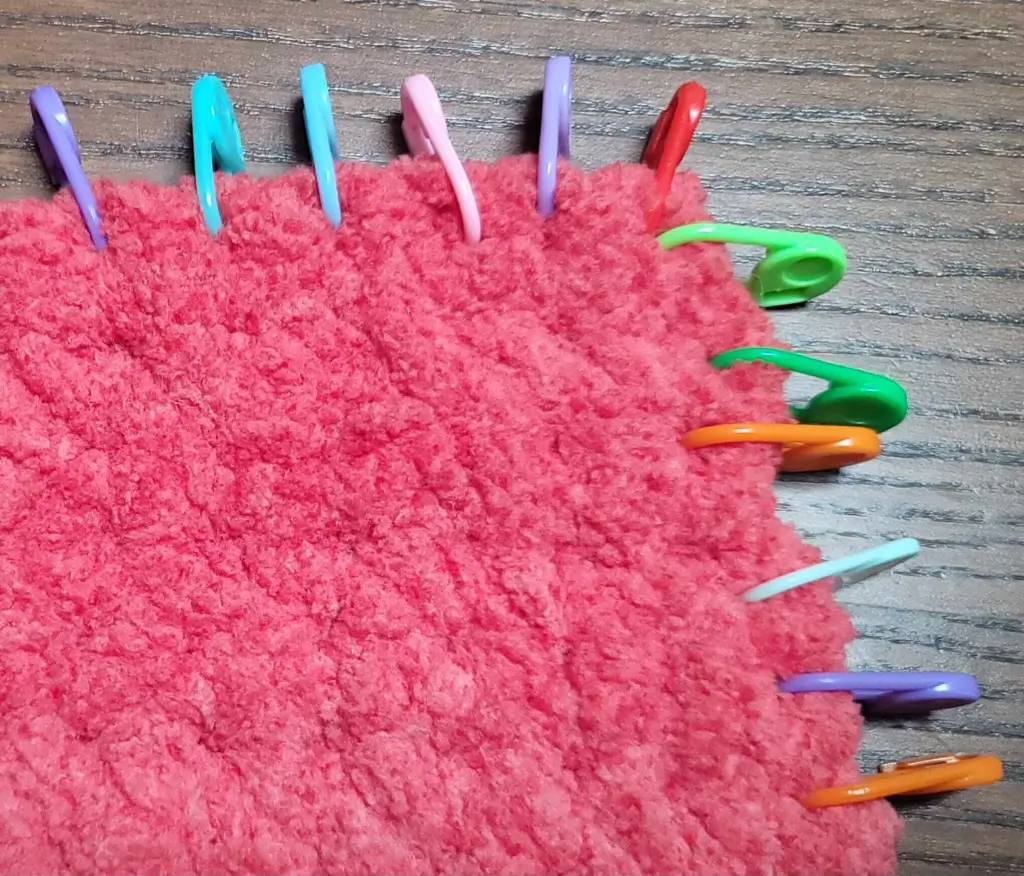
Okay, enough commiseration. Let's talk solutions. And the number one, most effective, life-changing solution is: STITCH MARKERS.
If you're not using stitch markers, start. If you are using them, use more of them. You can never use too many stitch markers!
Types of Stitch Markers And When To Use Each
Locking stitch markers (the kind that look like tiny safety pins): These clip right onto your stitch and stay there. Perfect for marking specific stitches you need to remember—beginning of rounds, increase points, pattern repeats.
Ring stitch markers (just circles of plastic or metal): These slide onto your hook or hang on stitches. Great for marking your place in a pattern or counting rows.
Bulb pins or safety pins: In a pinch, these work great as stitch markers. Just be careful they don't catch on your yarn.
Scrap yarn in a contrasting color: The OG stitch marker. Thread it through a stitch and you'll always know where it is. Free and effective!
Strategic Marker Placement
Don't just mark the beginning of your row and call it done. Get strategic about it (work smarter not harder). Here are some options to try:
Mark every 10 or 20 stitches across a row. Then instead of counting 73 individual stitches, you count “3 sections of 20, plus 13 more.” Much easier this way!
Mark the beginning of rounds. This one seems obvious, but it's amazing how many of us forget and then can't find where the round started.
Mark pattern repeats. If your pattern repeats every 8 stitches, mark every 8th stitch. Now you can see at a glance if you're keeping up with the pattern correctly.
Mark increases and decreases. If you're working a pattern with any kind of shaping involved, mark where increases/decreases should be. This helps you see if you're on track.
Use different colors for different purposes. Blue markers for every 10 stitches, red markers for beginning of rounds, green for pattern repeats. Whatever system works for your brain. I just recently started doing this. Don’t make it complicated. You should not have a key or legend to decode the colors.
Freedom From Not Having To Hold The Entire Count In Your Head
Once you start marking every 10th or 20th stitch, counting becomes SO much easier. You're not trying to maintain a specific count in your head, you're just counting to 10 multiple times and then counting the remainder.
If someone talks to you mid-count, you've only lost your place within that 10-stitch section, not across the entire row. It’s incredibly helpful, especially on large projects. The only downside is having to move the stitch markers each row/round.
Other Counting Tools & Techniques
Stitch markers are my favorite, but there are other tools and tricks that help:

Row Counters
Physical row counters: Those little things you click after each row. They're satisfying to click and they keep track for you. Downside: you have to remember to click them. (How many times have you worked 3 rows and then realized you never clicked the counter? Just me?)
App-based row counters: There are tons of crochet apps with built-in counters. Some even let you set up complex patterns with multiple counters for different sections. Very useful for complicated projects.Just remember to use it!
The notes app on your phone: Low-tech but effective. Just type the row number after each row. You can also add notes about what happened that row if you're working on something complex.
Pen-And-Paper Tally System
Old school but it works: keep paper next to you. Make a tally mark for each row or section. Groups of five tally marks (four vertical, one diagonal across) are easy to count quickly.
You can also write the row number and notes about each row. “Row 47: watched TV, lost count twice, pretty sure it's right.” Future you will appreciate the documentation.
Counting In Groups
Instead of counting “1, 2, 3, 4, 5, 6, 7, 8…” try counting in groups.
“One-two-three, one-two-three, one-two-three…” makes it easier to track patterns that repeat every 3 stitches, etc.
Or count in groups of 5: “Five, ten, fifteen, twenty…” It's faster and our brains can handle it better.
The “Count As You Go” Method
Some people count out loud or in their head AS they make each stitch. This creates a rhythm: “one-and-pull, two-and-pull, three-and-pull…”
The downside is this requires more active attention and focus, so distractions are more disruptive. But for some brains, the rhythm helps lock in the count better than counting after the fact.
Apps Specifically For Crochet Tracking
Apps like “Crochet Counter” and “Row Counter” etc let you:
- Track multiple projects
- Count rows and stitches
- Set reminders
- Note pattern repeats
- Add photos of your progress
If you're attached to your phone anyway, these can be great. Just don't lose count because you got distracted by other apps while your counter app was open. (Yes, this happens.)
Finding & Fixing Mystery Stitches
You've counted and you're off somehow but you don't know why! Now what? Let's troubleshoot.
How To Locate Where You Gained Or Lost Stitches
Lay it flat and look: Seriously, just look at your work. Don't count, just observe. Does anything look weird? Is there a spot where the fabric pulls funny? A stitch that's taller or shorter than the others?
Spread your work out on a table or your lap if you have to. Often you can SEE where things went wrong. Maybe there's a weird gap where you skipped a stitch, or two stitches that look too close together when they shouldn’t.
Count backward: Start from where you are now and count backward, comparing to the row below. When your counts stop matching up, you've found where the problem started.
Look for the usual suspects:
- Did you work into the turning chain when you shouldn't have (or vice versa)?
- Did you skip the first stitch or last stitch of a row?
- Did you accidentally work two stitches into one space?
- Did you miss a stitch entirely?
Fixing Without Frogging The Whole Thing
If you find the mistake and it's recent (last row or two), you can frog back just to that point and fix it. You don't have to start over from the beginning.
If the mistake is several rows back but only affects one stitch, sometimes you can carefully drop down to that stitch, fix it, and work your way back up. This is advanced-level fixing, but it's possible.
When To Just Fudge It And Adjust
Here's a secret: if you're off by 1-2 stitches and you can't find where the problem is, sometimes you can just… adjust going forward.
Off by one? Skip a stitch or add an extra stitch in an inconspicuous place on the next row. No one will ever know. (other than you of course)
Off by two? Strategically place two decreases (or increases) evenly across the next row.
This doesn't work for ALL patterns, but for many projects (especially blankets, scarves, or things with texture that hides minor fixes), it's totally fine.
Prevention For Next Time
Once you've solved the mystery, figure out what caused it so you can prevent it next time:
- Did you work into the wrong spot at the row end?
- Did you forget to count the turning chain?
- Did you get distracted and double-stitch?
Make a note and/or remind yourself before the next row. Use a stitch marker to prevent the same mistake.
Strategic Adjustment Techniques
If you decide to adjust rather than frog the whole thing:
Distribute the fixes carefully: If you need to decrease 3 stitches, don't do them all in one spot. Space them out evenly across the row. This keeps things from looking wonky.
Hide them in texture: If your pattern has texture (bobbles, popcorns, clusters etc), hide your adjustments in those areas. They're busy enough that no one will notice an extra or missing stitch.
Put them at the edges: If you're making something that will be seamed or bordered, adjustments near the edges are often hidden in the seam or border.
When “Close Enough” Is Actually Fine
For most non-fitted projects, being off by 1-3 stitches truly doesn't matter. Your blanket will still be a blanket. Your scarf will still be a scarf.
There's no inspection. If it looks good and functions properly, you're done. Embrace “good enough.”
Perfectionism is the enemy of finished projects. Sometimes, close enough is actually perfect.
The Bottom Line
Losing count doesn't mean you're bad at crochet. It means you're human. Even the most experienced crocheters lose count on a regular basis. The difference is they've developed systems to cope with it.
Use stitch markers. Count in sections. Take advantage of tools and apps. And when all else fails, remember that being off by a stitch or two is usually fine.
Your project doesn't need to be perfect, it needs to be done. “Perfect” looks different to everyone. If getting it done means accepting that you're not 100% sure if that was row 47 or 48, that's okay.
So next time you count the same row four times and get four different numbers, take a breath. You're not alone and you're not failing. You're just… crocheting. And that's exactly what you wanted to be doing.
Your Turn!
What's your worst lost count story? Do you have counting systems that work for you? Are you team stitch-marker or team wing-it-and-hope? Drop your counting confessions in the comments!
And if you've got tips or tricks that help you keep track, share them!
Crochet Confessions Series
This is Part 4 of my Crochet Confessions series! Catch up on previous posts or stay tuned for what's coming:
- Part 1: Yarn Chicken – The high-stakes game we all play
- Part 2: The Art of Frogging – When your project needs a swan dive
- Part 3: Tangled – A love-hate letter to yarn barf
- Part 4: Lost Count Syndrome ← You are here!
Coming up next in the series:
- Second Sock Syndrome: Why finishing is the hardest part
- Oops, All Mistakes: A field guide to common crochet disasters
Don't miss the next article! Subscribe to the newsletter or follow on social media to catch each new confession. Next week we're talking about almost-finished projects, the curse of the second sock or sleeve, etc, and why finishing is harder than starting. If you have a pile of 90%-done projects haunting you, you'll definitely want to read it.
See you next time for second sock syndrome confessions!
Have a counting trick that saves your sanity? A system that actually works? Share it in the comments!



I’ve learned I can only crochet when my husband is not home because he constantly interrupts me, and my count is officially lost!
It can be tough with too many distractions! My kids do the same to me lol
I feel like my brain is often in multitasking mode, so yes, losing track is nothing new to me, and I can totally relate to that, even though I don’t crochet per se.
Love the tips though, thanks for sharing!
Thanks for reading!