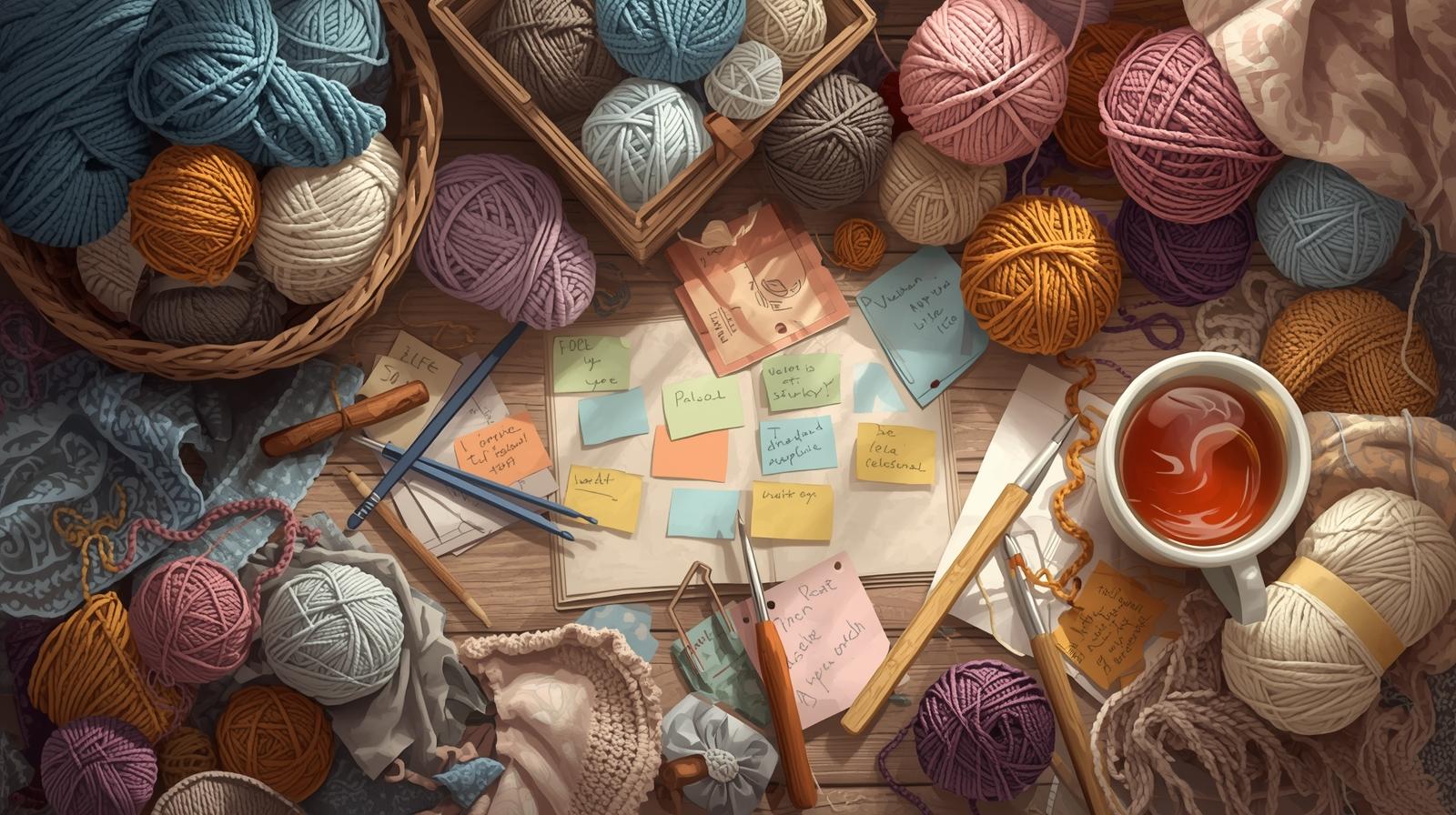
Managing Multiple WIPs
Introduction
If you're reading this, you probably have more than one crochet project going right now and are looking to learn how to manage multiple WIPs (works in progress). Maybe you've got a blanket that's been sitting in the same corner for months, a hat that just needs the brim finished, and a scarf you started last week. Sound familiar?
Having multiple WIPs (works in progress) doesn't mean you're doing something wrong. Some of us love the option of working on different projects. The problem isn't the fact of having multiple WIPs; it's when they start to feel overwhelming or when none of them seem to be making any progress.
So let's talk about how to manage multiple projects in a way that actually works, keeps you motivated, and (most importantly) keeps your projects moving forward instead of collecting dust.
RELATED: How to Finish Crochet WIPs (Works in Progress) Without Stress
DISCLOSURE: This post contains affiliate links, meaning if you click on a product or service, and decide to purchase it, I may receive a commission at no extra cost to you. All recommended products and services are based on my experience with them. For more information, please read my Disclaimer.
Why Multiple WIPs Can Actually Work
Working on multiple projects at once isn't bad. In fact, for many, it's actually really great for us.
Different projects serve different purposes in our lives. You might have:
- A “mindless” project for when you're watching TV or need to relax
- A challenging project that requires your full attention and keeps your skills sharp
- A portable project that lives in your bag for waiting rooms or commutes
- A seasonal or gift project with a deadline
- A “cleanser” project to help prevent burnout on a larger piece
The key is being intentional about it. When you're strategically juggling multiple WIPs rather than randomly, you're setting yourself up for success instead of stress!
Finding Your WIP Limit
Not everyone can handle the same number of active projects. Your ideal number depends on several things:
Consider your available time. Let's do the math. If you only have 30 minutes a week to crochet, keeping 5 projects active means each one gets about 6 minutes of attention. That's not enough to build momentum or feel like you're making any kind of progress.
Think about your personality. Some people thrive on variety and get bored easily. They may do well with 4-6 active projects. Others prefer focus and get overwhelmed with too many options so they may max out at 2-3 projects.
Factor in your project types. A blanket, a pair of socks, and an amigurumi require different levels of mental energy and time. Three large, complex projects will feel very different from three quick, simple ones.
A good starting point? Try keeping 3-4 projects active at any given time, with at least one being a quick or simple project. You can always adjust from there based on what feels right to you.
Create A Rotation System
One of the most effective ways to manage multiple WIPs is to create a rotation system. This keeps all your projects moving forward without leaving any completely abandoned. Here are some rotation options to try:
The Weekly Rotation: Dedicate specific days or times to specific projects. For example, Mondays and Thursdays might be for your blanket, Tuesdays for your amigurumi, and weekends for your gift projects. This creates structure and ensures everything gets attention.
The Completion-Based Rotation: Work on one project until you hit a natural stopping point (finish a repeat, complete a section, reach a color change), then switch to the next project. This gives you small wins and keeps things fresh.
The Mood-Based Rotation: Keep all your projects accessible and choose based on how you're feeling that day. Want to zone out? Grab the simple project. Feeling ambitious? Tackle the complex pattern. This works well if you have good discipline and won't just always choose the “fun” project.
The key with any rotation system is actually following it. Set reminders if you need to, or keep a simple tracker to make sure no project goes untouched for too long.

Strategic Project Pairing
Not all projects work well together, so. pairing your projects can make managing multiple WIPs much easier.
Pair a complex project with a simple one. When your brain is fried from counting stitches on a complicated lace pattern, it's nice to have a straightforward project you can zone out on.
Combine a large project with a small one. Blankets and afghans can feel never-ending. Having a quick project (like dishcloths or a hat) gives you the satisfaction of completing something while your larger project is still in progress.
Balance deadlines. If you have a gift project due next month, don't start three other time-sensitive projects. Pair deadline projects with open-ended projects that can wait.
Mix up your stitch work. If all your projects use similar stitches or techniques, you might get bored. Variety in stitches, yarn weights, and color work can keep things more interesting.
The Project Audit
It's time for an honest look at your WIPs. I’m basically going to copy/paste this section from my other post because it’s important when you are trying to balance and work on multiple WIPs.
Do an HONEST audit! If you have to, pull everything out and lay it on the floor or work surface so you can see what you are working with.
Label it: Decide what projects you are going to keep, which you will donate, and which you will “frog” (to completely pull apart or unravel) and make into something else.
Time Limits: Think about a more realistic WIP limit for your life. If you are incredibly busy, keeping your limit to 1 or 2 WIPs is perfectly reasonable. If you have more time, instead of starting a new project, work on one you already have going.
I like to track my WIPs in a project planner. You can get one just like this or make your own!
On a deeper level, ask yourself these questions:
- Do I still want to finish this?
- Do I remember what the pattern is or where I am?
- Do I have all the materials needed to complete it?
- Is this project still relevant to my life right now?
Be honest here. If a project no longer makes you happy or serves a purpose, it's okay to frog it and repurpose the yarn. Not every started project needs to be finished. Some projects were just yarn practice, and that's perfectly fine.
Creating Project Homes
One of the biggest challenges with multiple WIPs is keeping them organized and accessible. If you can't find a project or it takes 10 minutes to locate all its pieces, you're not going to work on it. (Let's be real!)
Individual project bags: Each WIP gets its own bag containing the yarn, pattern, hook, stitch markers, and any other supplies needed. Clear bags let you see what's inside at a glance, but any bag works well if your goal is to keep things together.
Keep notes inside each bag: Write down what row you're on, any pattern modifications you're making, or notes about gauge or fit. Your future self will thank you when you pick up that project after being away.
Designate a WIP zone in your home. Whether it's a basket, shelf, or corner of a room, having one spot where all your active projects live makes it easy to grab what you need and prevents projects from getting scattered all around the house.
Think portability: If you want a project to be portable, keep it in a grab-and-go bag by the door. If a project needs to stay home because it's large or requires a pattern book, don't act like you'll take it places.
Progress Tracking That Actually Helps
Tracking your progress serves two purposes: it helps you see how far you've come (motivating!) and it keeps you accountable to making forward movement.
Visual tracking works wonders. Some crocheters love using apps or spreadsheets, but sometimes a simple chart on your fridge showing which projects got worked on each week is enough. Seeing visual progress, even if it's just check marks, can be incredibly motivating.
Set mini-milestones. Instead of just tracking “blanket” with no end in sight, break it down: “Complete 10 more rows,” “Finish the border,” “Work through 2 more skeins.” Smaller goals are easier to achieve and give you more frequent wins.
Celebrate the wins, even the small ones. Finished a granny square? Completed a sleeve? Added another inch to your scarf? Acknowledge it! Share it in your online crochet community, tell a friend, or just give yourself a moment to feel proud. These small celebrations fuel motivation for the next session.
Be honest about what's not moving. If a project hasn't been touched in a month, that's important to know. Maybe it needs to move from “active” to “paused,” or maybe it's time to admit it's not going to happen and free up that mental space and yarn.

When Projects Stall: Getting Unstuck
Even with the best management system in place, sometimes projects will still come to a screeching halt. Here's how to get them moving again.
Identify the stuck point. Is it a tricky technique you're avoiding? Boredom with repetitive rows? Uncertainty about the pattern? Once you know why it's stalled, you can address it.
Break through the blockage. If it's a difficult technique, watch tutorial videos or ask for help (the crochet community is amazing for this!). If it's boredom, pair that project time with something enjoyable like your favorite podcast. If it's pattern confusion, take 15 minutes to work through the confusion rather than avoiding it.
Pivot: Sometimes a project stalls because deep down, you don't want to make it anymore. And that's okay! You can modify the pattern, change the colors, or even repurpose what you've made into something different. Crocheting should be fun for you!
Use the “just 10 stitches” rule. When a project feels overwhelming, commit to just 10 stitches. Usually, once you start you'll keep going. And if you don't? At least you made some progress.
Be Flexible
Whatever system you create for yourself for managing your WIPs, it should help (not hinder) you. If your rotation system isn't working, change it. If your WIP limit feels too restrictive or too loose, adjust it. If a project you thought would be fun turns out to be awful, it's okay to reassess.
The goal isn't to have the perfect system or to finish every single project you start. The goal is to enjoy your crochet time and feel good about your progress. Some people thrive with 10 active projects and love the variety. Others prefer 2 projects and like the focus. Neither approach is wrong.
Pay attention to what makes you feel energized versus what makes you feel stressed. Your ideal WIP management system should reduce stress and overwhelm, not create it.
Summary
Managing multiple WIPs is absolutely possible when you approach it with intention and strategy. Remember to find your personal WIP limit, create systems that work for your lifestyle, and stay organized so your projects (or pieces of it) don't get lost.
Most importantly, give yourself permission to enjoy the process. If managing multiple WIPs brings you joy and variety without overwhelming you, keep doing it! If you find yourself stressed, scale back. There's no right or wrong here, but be sure to figure out what works for you.
Related: How to Finish Crochet WIPs (Works in Progress) Without Stress
How many WIPs do you currently have active? What's your favorite strategy for keeping them all moving forward? Share your tips in the comments – we'd love to hear what works for you!