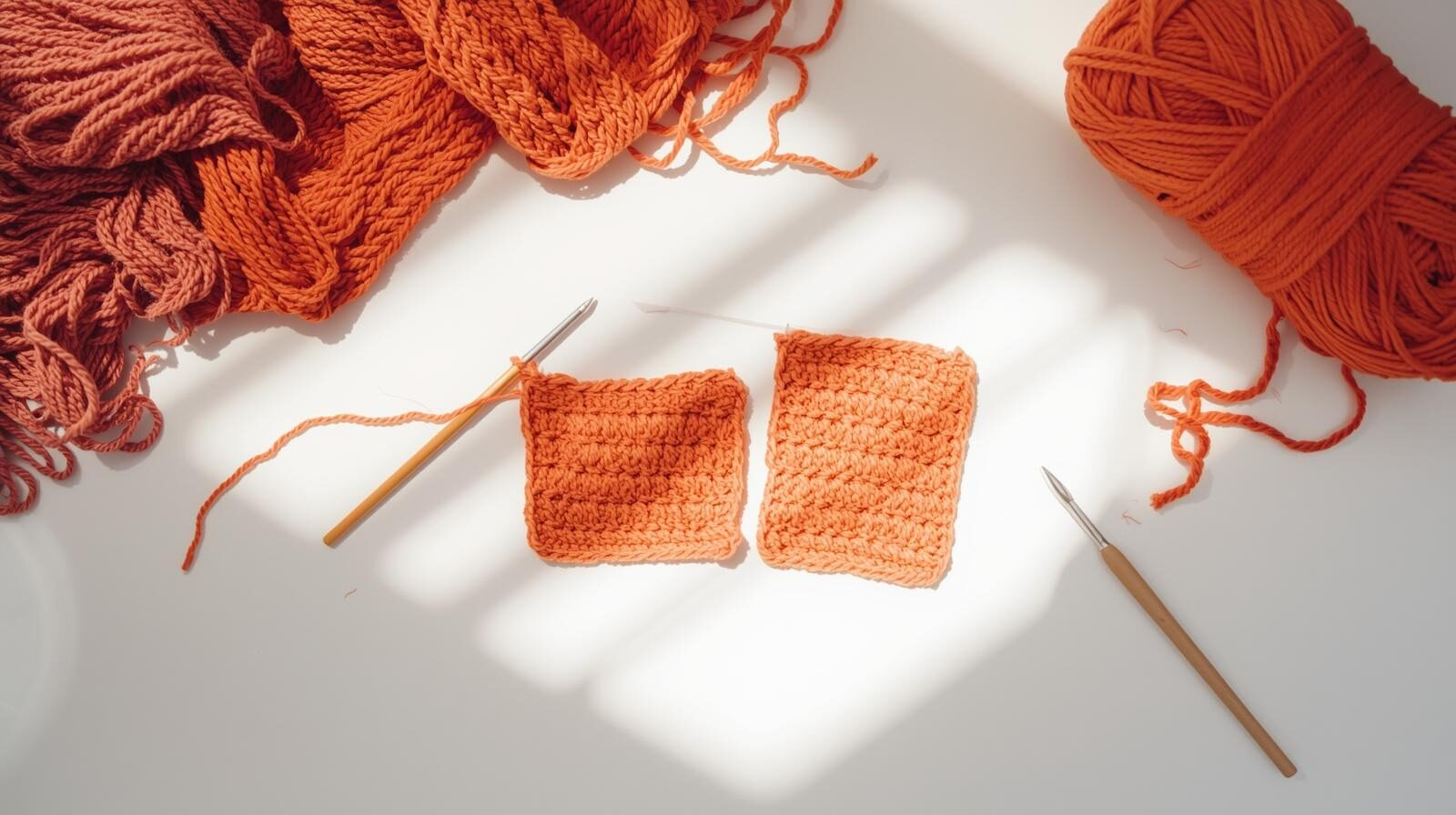
Second Sock Syndrome
You've made one beautiful sock that is perfect and fits great. You set it aside to start the second one and…
Weeks pass. Then months. The single sock sits in your project basket while you start seven other projects. Every time you see it, you feel a pang of guilt. “I'll make the second sock this weekend,” you tell yourself. Obviously that doesn’t happen. Maybe next weekend, or the one after that?
Welcome to Second Sock Syndrome, the curse of the almost-finished project. And despite the name, it's not just about socks. It's about the second “anything” such as sleeves, mittens, the last ten granny squares for your blanket, weaving in ends, adding buttons, etc. Essentially any finishing task that stands between you and a completed project.
Today we're talking about why finishing is psychologically harder than starting, why we all have a pile of 90% done projects, and most importantly how to actually push through and FINISH THE DANG THING.
DISCLOSURE: This post contains affiliate links, meaning if you click on a product or service, and decide to purchase it, I may receive a commission at no extra cost to you. All recommended products and services are based on my experience with them. For more information, please read my Disclaimer.
What Is Second Sock Syndrome?
Second Sock Syndrome is when you complete one item of a pair (or one part of a project) and then completely lose motivation to make the matching piece, thus leaving the project unfinished.
The classic example: You make one sock but the thought of making an identical second sock fills you with an annoying kind of dread. The first sock was exciting and new. The second sock is just… repetitive work. So you start something else instead.
It's the curse of “I'm basically done” when you're actually not done at all. And it haunts us all.
Why We Abandon Projects
Let's dig into why this happens, because understanding the enemy is half the battle.
New Projects Are Exciting; Finishing Is Boring
New yarn! New pattern! New possibilities! A new project is exciting and full of potential. Your brain releases dopamine just thinking about it.
Finishing a project you've already been working on for weeks? Meeeh. Your brain has already moved on to the next exciting thing. That new shawl pattern you just saw? THAT'S where the excitement is.
We're essentially chasing the high of starting something new, and finishing requires us to delay that gratification. Our brains aren’t happy about that.
We've Already “Accomplished” It In Our Minds
Here's the sneaky part: once you've made one sock, your brain kind of checks it off as done. You've proven you CAN make a sock, learned the pattern, and solved the problems. In your brain's project management system, “make sock” is complete.
The fact that you need TWO socks for them to be functional? Your brain ain’t got time for that. You've already done the hard part (learning the pattern). Doing it again feels boring and redundant.
This is why the second sleeve is so hard—you've already made a sleeve! You know how! Making another one feels like unnecessary repetition (even though you know it’s necessary).
The Tedious Parts Pile Up At The End
Let's be honest: the end of projects is where all the boring stuff lives. Tasks such as weaving in ends, blocking, seaming, adding closures or any other finishing details. These tasks aren't exciting and not the fun creative part.
And because it’s the END, they're all that stands between you and “done.” But they're also all that stands between you and starting something new. So we procrastinate, and our project sits as an unfinished WIP forever.
Perfectionism Kicks In (“What If I Mess It Up NOW?”)
You've invested weeks or months in this project and you're so close to done. Suddenly the stakes feel REALLY HIGH. What if you mess up the seaming? What if you sew the button on crooked? What if the blocking goes wrong and ruins everything?
We don't want to risk ruining all that work, so we just… don't finish. This is especially true for projects we're really proud of or that are gifts for people we care about. The pressure to make it perfect makes us avoid finishing it at all.
Project Fatigue Is Real
You've been working on this blanket for three months. You're tired of looking at it, tired of these colors, and tired of this pattern.
Project fatigue is real and it's exhausting. By the time you're near the end, you've lost the initial enthusiasm that carried you through the beginning. You're in the slog portion of the project, and it's not fun anymore. Finishing this project feels like homework.

The UFO Pile
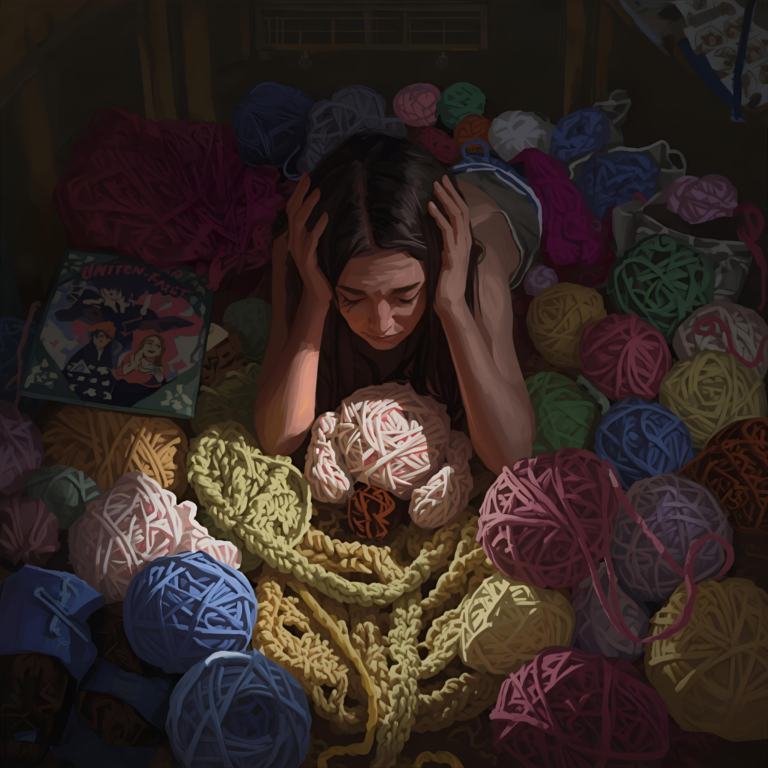
Let's talk about the UFO pile. UFO stands for “Unfinished Object,” and if you crochet, you definitely have one. Maybe it's a basket, or a shelf, or an entire closet. But somewhere in your home, there's a collection of projects you started with enthusiasm and abandoned with guilt.
We All Have Them (You're Not Alone)
Every crocheter has UFOs.The difference between crocheters isn't whether they have unfinished projects, it's how many and how they feel about them.
Some people embrace their UFO pile. “These are my options!” they say cheerfully, picking up whichever one calls to them that day.
Others feel crushing guilt every time they see their UFOs. Each unfinished project is a reminder of their failure to finish what they started.
Neither approach is wrong, but one is definitely more fun.
The Projects That Are “Almost Done” (For Six Months)
These are the worst! Finishing them would take maybe an hour or two. But they sit there for MONTHS. Why? Because that last hour feels harder than the first twenty hours. That's Second Sock Syndrome at its best. And of course starting a new pattern or project, thought exciting, brings on guilt from not finishing the UFOs.
Specific Finishing Tasks We Avoid
Let's break down some specific tasks that trigger Second Sock Syndrome, because knowing your enemy helps you fight it.
Weaving In Ends: Why We Hate It And How To Make It Less Awful
Weaving in ends is universally despised. It's tedious. It's time-consuming. It's not creative. And there are SO MANY of them at the end of a colorwork project.
Why we avoid it:
- It's boring
- It takes longer than we think it will
- We're worried about doing it wrong and having ends come loose later
How to make it less awful:
- Weave in as you go during the project
- Save it for TV/movie time—it's perfect for mindless multitasking
- Do just five ends per day instead of all 47 at once
- Use a better tapestry needle (good tools make this less task miserable)
- Accept that “good enough” is fine
Seaming: The Fear Of Ruining It At The Last Moment
Seaming is where you join pieces together—sweater panels, granny squares, sleeves to bodies. It's crucial but scary.
Why we avoid it:
- What if the seam looks bad and ruins the whole project?
- What if the pieces don't line up right?
- What if we sew it together wrong and have to redo it?
- Which technique is the right one to use?
How to push through:
- Practice the seaming technique on a swatch first
- Use the mattress stitch (it's nearly invisible)
- Pin pieces together before sewing so you can see if they'll line up
- Remember that you can undo seaming if needed
- Watch a video tutorial right before you do it for confidence
Blocking: Seems Like Too Much Effort
Blocking is the process of wetting or steaming your finished project and pinning it into shape to dry. It can drastically improve the quality of your work, but it requires:
- Space to lay things out
- Blocking mats or a blocking board
- Pins (so many pins)
- Time to let it dry (24-48 hours usually)
Why we avoid it:
- It's a whole production
- You need space and tools
- You have to wait for it to dry
- “It looks fine without blocking” (it doesn't, but we tell ourselves this)
How to actually do it:
- Block things in the bathtub if you don't have floor space
- Buy blocking mats once—they last forever
- Block while you're working on another project

Adding Buttons/Closures: Why Is This So Hard To Do?
You finished a cardigan, It’s done, looks beautiful, but it just needs buttons. Just five buttons and it's finished. (Those buttons will not be sewn on for three months)
Why we avoid it:
- We have to find the right buttons (decision fatigue)
- We're not sure where to place them
- We're worried about sewing them on crooked
- It requires going to the store to buy buttons
- It's one more thing
How to just do it:
- Buy buttons at the same time you buy yarn (one less decision later)
- Use button placement markers or pins to test placement
- Remember that buttons can be moved if you mess up
The Second Piece: The Motivation Is GONE
Making another identical item feels like the most boring task in the world.
Why we avoid it:
- There's no challenge (we already figured it out)
- It's purely repetition with no creativity
- We're bored of this pattern/yarn/project now
- New projects are calling to us
How to power through:
- Make both at the same time (two-at-a-time method)
- Alternate: do a few rows on one, switch to another project, come back
- Bribe yourself (in a positive and healthy way of course)
- Accept that it's boring and do it anyway while listening to podcasts or audiobooks
Borders: One More Step Feels Impossible
Your blanket is done! You've crocheted all the squares, sewn them together, woven in most of the ends. It just needs a simple border to finish it off.
That border will take approximately two hours. Uuuuuugh.
Why we avoid it:
- We thought we were done and now there's MORE
- Borders require attention (getting corners right, keeping count)
- The project is already functional without the border
- We're so, so tired of this project
How to finish:
- Do one side of the border per day (break it into manageable pieces)
- Make the border in a fun contrasting color to make it interesting
- Remind yourself that borders really do make it look finished
- Set a deadline (gifting it next week? Border time!)
Tips & Tricks To Actually Finish
Okay, let's talk about solutions. How do we actually finish things?
The “Finish As You Go” Method
Don't save all the finishing tasks for the end. Do them as you work:
- Weave in ends after each color change
- Block pieces as you complete them (before assembly)
- Sew in buttons as you finish button bands
- Border each granny square before joining them
This spreads out the boring tasks so they don't pile up into an overwhelming mountain at the end.
Set A Finish-Only Day/Week
Declare a day (or week) where you're not allowed to start anything new. You can ONLY work on finishing UFOs.
Make it fun:
- Invite friends for a finish-along
- Set up a cozy space with good snacks
- Celebrate each completion
Pair Finishing With Something Enjoyable
Make the boring tasks more bearable by pairing them with something you enjoy:
- Weave in ends while watching your favorite show
- Block projects while listening to an audiobook
- Sew on buttons during a phone call with a friend
- Work on that second sock while at a crochet group
Your brain will start associating the boring task with the enjoyable activity you paired it with.
The “10-Minute Rule”
Commit to working on your UFO for just ten minutes. Just ten! That's it!
Often, ten minutes turns into twenty or thirty because once you start, the resistance melts away. But even if it doesn't, ten minutes of progress is better than zero.
Do this daily and you'll finish things without it feeling overwhelming.
Accountability Partners Or Finish-Alongs
Tell someone you're going to finish the thing. Post about it on social media. External accountability is powerful. You don't want to tell your accountability buddy that you didn't do the thing, so you do the thing.
Reward Systems That Actually Work
Bribe yourself. Seriously. Set up rewards:
- “When I finish this sock, I can buy yarn for that new shawl”
- “When I weave in all these ends, I'm ordering takeout”
- “When I block this blanket, I'm taking the day off to do nothing”
Make the rewards meaningful to you. The dopamine hit of starting something new? You can have it AFTER you finish what you're working on.
The “One In, One Out” Rule For WIPs
Set a limit: you can have X number of active WIPs at any time (3? 5? pick your number). When you hit that limit, you can't start anything new until you finish something.
This forces you to actually complete projects before starting new ones. It's hard at first, but it works.
Break It Into Micro-Tasks
Don't think “I need to finish this sweater.” That's overwhelming. Instead:
- Today: Weave in ends on the body
- Tomorrow: Seam one sleeve
- Next day: Seam the other sleeve
- Next day: Add buttons
Tiny tasks feel achievable and you know you can do one tiny task. Do another later or another day. Keep this up and suddenly the project is done.
When It's Okay To DNF (Did Not Finish)
Not every project deserves to be finished. Sometimes you need to give yourself permission to let it go.
Some Projects Don't Spark Joy Anymore
You started this project a year ago. You're a different person now, your taste has changed, or maybe the colors don't excite you anymore. It could also be that the pattern isn't fun anymore.
It's okay to frog it or donate it unfinished. You don't owe that project anything. Your time is valuable so if finishing it feels like torture, it's not worth it.
Permission To Frog And Repurpose
That half-finished sweater in a color you no longer like? Frog it. Wind up the yarn. Use it for something else. The yarn is the valuable part, not the hours you put into the wrong project.
This feels wasteful, but it's not. Sitting in a basket forever is wasteful. Freeing up the yarn for a project you'll actually love and finish? That's smart.
The “Donate It As-Is” Option
Some UFOs are functional even unfinished. A blanket without a border is still a blanket. Donate it to a shelter or charity. Someone will use it and appreciate it even if it's “not done.”
This clears your UFO pile and does good in the world. Win-win.
Lessons Learned Still Count
Even if you never finish it, you learned something from that project:
- Practiced new stitches
- Figured out a tricky technique
- Learned what patterns you do and don't enjoy
- Discovered you hate seaming (or something else annoying) and will avoid it in future projects
The experience has value even if the project doesn't get finished.
The Victory Of Finishing
Finishing projects feels AMAZING. The moment you weave in the last end, or sew on the final button, or complete that second sock, let's face it, there's a rush of accomplishment that's hard to describe. You did it! It's DONE!
All those weeks or months of work have turned into an actual finished object. That feels incredible.
Wearing/Using Your Project Hits Different
There's something special about using something you made with your own hands. That sweater you wear on a chilly day or that blanket on your couch. Those socks on your feet.
Every time you use it, you get a little burst of pride. “I made this.” And it's true, you did.
You CAN Do It!
If you've gotten a project to 90% done, you've already done the hardest part. You've learned the pattern, crocheted for hours, problem-solved and made it through!
The last 10%? That's nothing. It's not hard, it just feels tedious. You're absolutely capable of doing tedious things. You've done harder things.
The Bottom Line
Second Sock Syndrome is real, it hits everyone, and it's not a character flaw. It's just how our brains work. We love starting new things more than we love finishing old things.
But finishing is a skill separate from making. We can train ourselves to push through by building systems that make finishing easier. And most importantly, we can give ourselves permission to NOT finish things that don't deserve our time anymore.
So pick one UFO. Just one. Commit to finishing it this month. Break it into tiny tasks. Pair it with something enjoyable. Bribe yourself if needed. And finish it.
Then celebrate. Because finishing things is hard, and you did it anyway!
Your Turn!
What's been in your UFO pile the longest? Do you have a pile of shame or a pile of possibilities? What helps you actually finish projects? Share your second sock syndrome stories in the comments!
And if you've successfully conquered your UFO pile, please share your secrets! Maybe it will help the rest of us!
Crochet Confessions Series
This is Part 5 of my Crochet Confessions series! Catch up on previous posts or stay tuned for the finale:
- Part 1: Yarn Chicken – The high-stakes game we all play
- Part 2: The Art of Frogging
- Part 3: Tangled – A love-hate letter to yarn barf
- Part 4: Lost Count Syndrome – When your brain stops working
- Part 5: Second Sock Syndrome ← You are here!
Coming up next (Series Finale!):
- Oops, All Mistakes: A field guide to common crochet disasters and how to fix them
Don't miss the final installment! Subscribe to the newsletter or follow on social media. Next week we're wrapping up the series with all those common mistakes we make—mystery increases, wonky squares, forgotten turning chains, and when to fix vs. when to embrace the chaos.
See you next time for the final confession!
Have a finishing strategy that actually works for you? A UFO success story? Share it in the comments and inspire us all!


This is so relatable. Even for people who do not knit or crochet, the idea of having something almost finished and still not completing it really hits home. You explain this in a way that makes it feel normal instead of something to feel bad about. I like how you point out that finishing is often harder than starting and that it applies to so many areas, not just crafting.
I completely agree, this struggle is definitely felt in so many ways in life. Thank you for reading!
This is so relatable, especially the part about losing momentum after the first sock is done. The explanation of why finishing feels harder than starting really clicked for me, and the mindset shift around unfinished projects was reassuring. It made the whole struggle feel normal instead of frustrating.
Thank you! I’m so happy you enjoyed this read. There truly is a mindset shift we need to do when we have to replicate the items we make. The frustrations that appear when crocheting are all part of the process 🙂