Understanding Dye Lots
Let's talk about understanding dye lots and what you need to know. You're halfway through a beautiful blanket when you run out of yarn. You head to the store, grab another skein of the exact weight, brand and color yarn and continue crocheting. No problem.
At some point you notice it. The new yarn looks… different. Not a big difference, but just enough that your blanket now has a visible line where the old yarn ends and the new yarn begins. You KNOW you got the right yarn, so you check the label again. Same brand, same color name, same yarn weight. What’s going on?!
What You Need To Know
The world of dye lots is one of those intermediate crochet challenges that catches people off guard. As you move beyond beginner projects into larger, more yarn-intensive projects, understanding dye lots (and knowing how to work around them) becomes essential.
If you haven't already, check out my post on Advanced Yarn Label Reading for a comprehensive look at what all those numbers and symbols mean. Today’s post dives specifically into the dye lot mystery.
DISCLOSURE: This post contains affiliate links, meaning if you click on a product or service, and decide to purchase it, I may receive a commission at no extra cost to you. All recommended products and services are based on my experience with them. For more information, please read my Disclaimer.
What Are Dye Lots, Anyway?
A dye lot is a batch of yarn that was dyed together at the same time. Even though the manufacturer is aiming for the exact same color every time, slight variations happen because:
- Different batches of dye have microscopic differences
- Environmental factors (temperature, humidity) affect dye uptake
- The dyeing equipment might be slightly different
- Base fiber can vary slightly between batches
Think of it like baking cookies. Even using the same recipe, cookies from different baking sessions might be slightly different shades of golden brown.
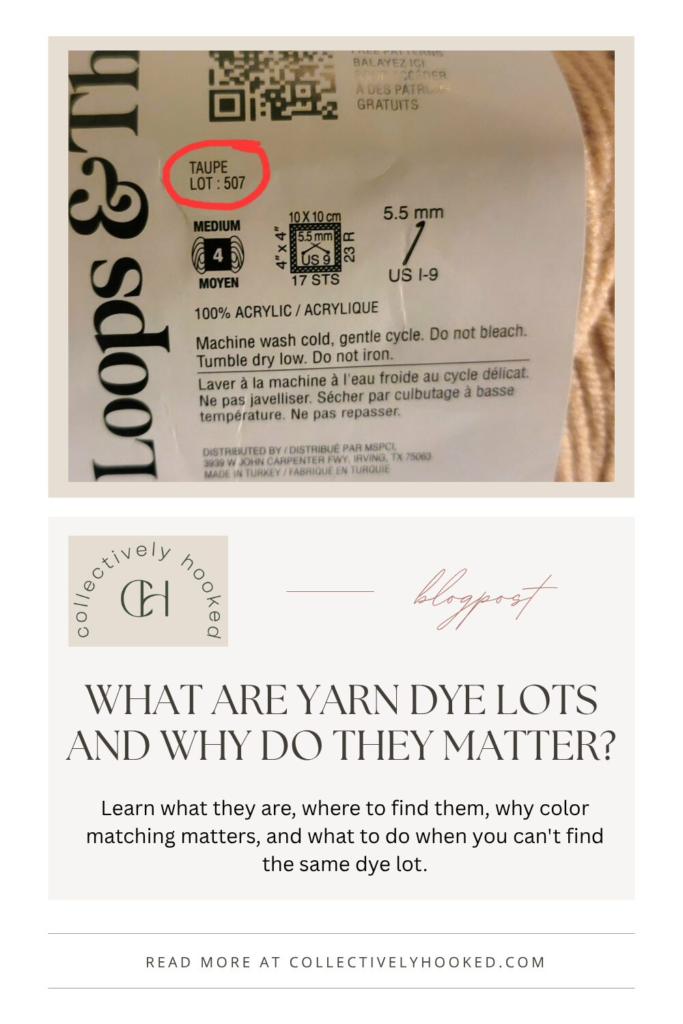
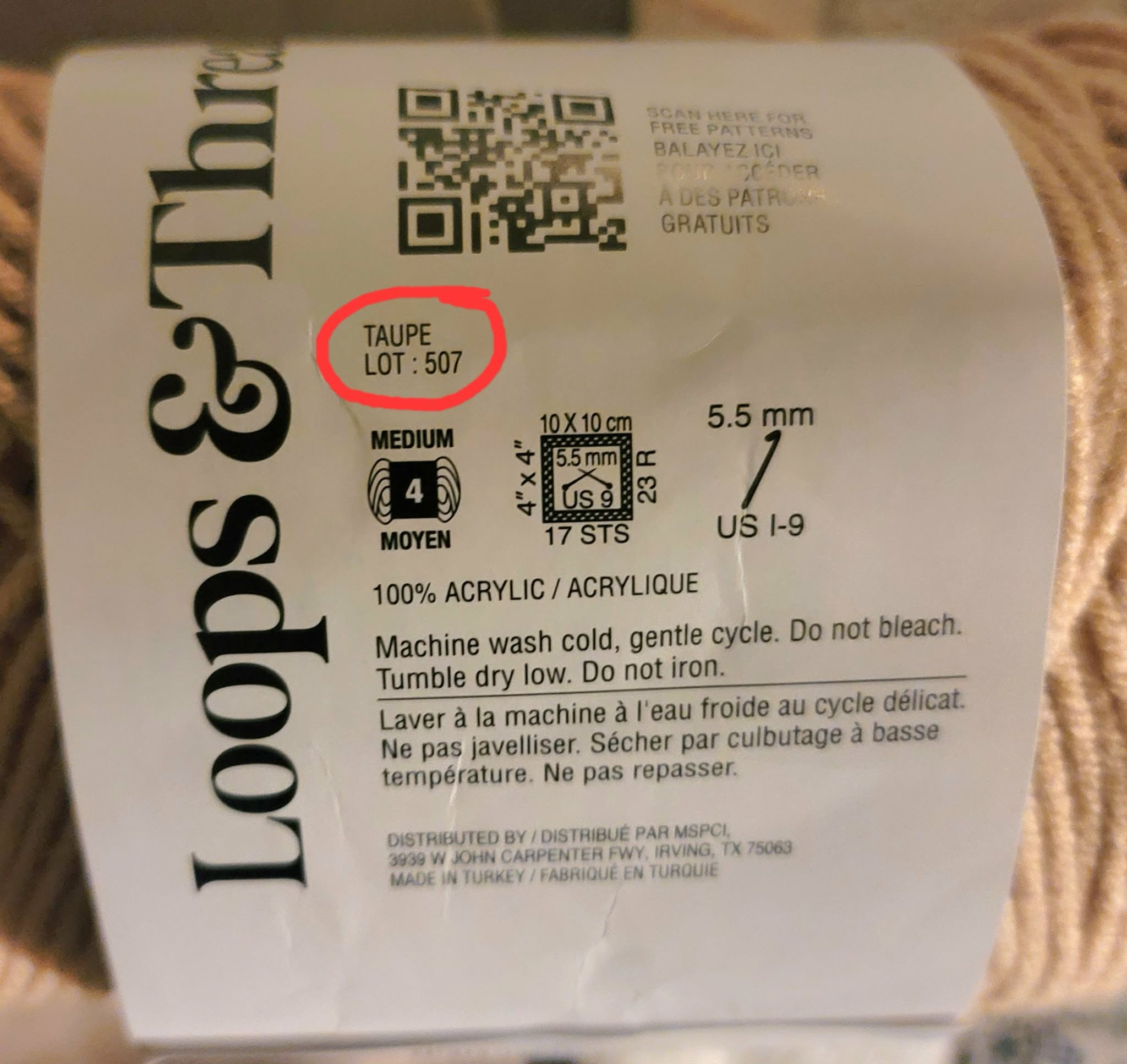
The dye lot number on your yarn label tells you which batch that specific skein came from.
Where to Find the Dye Lot Number
Look at your yarn label. You'll typically see something like this:
- Color name: “Dusty Rose”
- Color number: “2456”
- Dye lot number: “B47293” (or similar alphanumeric code)
The dye lot number is usually separate from the color number. It might be labeled as:
- “Dye Lot”
- “Lot”
- “Batch”
- Sometimes just a number/code without a label
Some yarn brands print it where you can easily see it. Others hide it in tiny text. Either way, get in the habit of looking for it every time you buy yarn.

Why Dye Lots Matter
For small projects (dishcloths, amigurumi, scarves), dye lot differences are rarely noticeable. You're using one or two skeins from start to finish.
But dye lots become critical for:
Large single-color projects:
- Blankets
- Solid-color sweaters
- Shawls
- Large home decor items
Projects where color consistency is visible:
- Anything with large, uninterrupted areas of the same color
- Gifts or items where perfection matters
- High-contrast projects where even slight variation stands out
When it doesn't matter as much:
- Colorwork projects (multiple colors break up the variation)
- Textured stitch patterns (texture disguises color shifts)
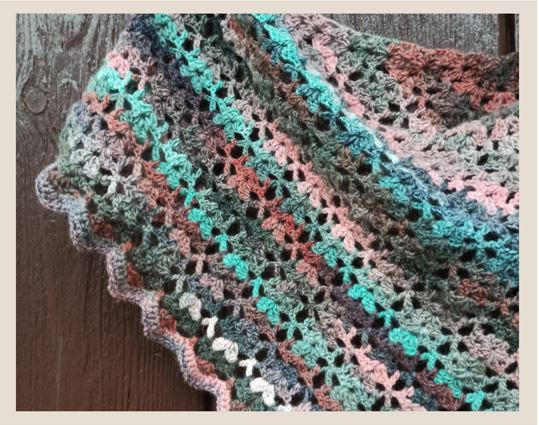
- Striped or gradient projects (built-in color variation)
- Projects using variegated yarn (already multi-tonal)
The Golden Rule of Dye Lots
Buy all your yarn for a project at once, from the same dye lot.
I know, I know. That requires:
- Knowing how much yarn you'll need before you start
- Having the budget to buy it all upfront
- Taking a leap of faith that you'll actually finish the project
But trust me on this: buying extra yarn from the same dye lot is cheaper and less stressful than trying to track down a matching dye lot later or living with a visible color shift in your finished project.
How to Calculate Yarn Needs
Use the pattern estimate as a starting point: Most patterns tell you approximately how many skeins/yards you need. Add 10-20% to be on the safe side.
Better yet, make a gauge swatch:
- Crochet a 6″ x 6″ swatch
- Measure how much yarn it used
- Calculate how many square inches your project is
- Do the math (yes, there's math, but it's worth it)
For garments, size up: If you're between sizes, buy for the larger size. Extra yarn beats running short.
Keep your receipts: Most yarn stores accept returns of unused yarn (with receipt and intact label). Buy extra, return what you don't use.
What If You Can't Get the Same Dye Lot?
Life happens. You run out. The store is sold out. Your dye lot is discontinued. Now what?
Strategy 1: Alternate Skeins
This is the sneakiest workaround and works surprisingly well.
How it works: Instead of using all of Skein A then all of Skein B, you alternate between them every few rows.
The method:
- Work 2 rows with Skein A
- Work 2 rows with Skein B
- Repeat throughout
Why it works: Any color variation gets spread across the entire project rather than creating one obvious line. The eye averages the colors together.
Best for:
- Projects worked in rows (blankets, scarves)
- Situations where you have 2-3 different dye lots
Not ideal for:
- Projects worked in the round (amigurumi, hats) – creates a spiral effect
- When dye lot difference is extreme
Strategy 2: Strategic Placement
Use different dye lots in different sections where the shift makes sense.
Examples:
- Blankets: Use one dye lot for the body, another for the border (intentional framing)
- Sweaters: Use one dye lot for body, another for sleeves (seams hide the transition)
- Colorwork: Use different dye lots for different colors in the pattern
The trick: Make it look intentional, not accidental.

Strategy 3: Create a Gradient
If your dye lots are noticeably different, lean into it.
How:
- Deliberately work from light to dark (or vice versa)
- Use the alternating rows technique but transition from more rows of one dye lot to more rows of the other
- Creates an ombre or gradient effect
Best for:
- When dye lots are different enough to be noticeable
- Scarves, shawls, blankets
- When you're okay with the project looking different than originally planned
Strategy 4: Save Different Dye Lots for Edging/Borders
Use your closest-match dye lot for the main body, save the oddball for trim:
- Blanket borders
- Sweater ribbing
- Decorative edging
Since these are separate elements, slight color variation looks intentional rather than as a mistake.
Strategy 5: Embrace It (Yes, Really)
Sometimes the dye lot variation is so minor that only you will notice it. And here's a secret: most people won't notice.
Ask yourself:
- Will this be viewed from a distance? (Blankets on beds, throws on couches)
- Is the texture distracting enough to hide it? (Popcorn stitches, cables)
- Does it actually bother you, or do you just think it should?
Handmade items are allowed to have character. Sometimes that visible line tells the story of your project (you loved it enough to finish it even when yarn ran out).
Shopping Tips for Dye Lot Success
In-Store Shopping
Always check dye lots when buying multiple skeins:
- Find the yarn you want
- Check the dye lot number on the first skein
- Make sure ALL skeins you're buying have the same dye lot number
- If there aren't enough skeins in one dye lot, ask if they have more in the back
Don't assume skeins sitting together have matching dye lots. Check each one.
Buy extra. Most stores accept returns of unused yarn with receipt and intact label.
Online Shopping
This is trickier because you can't see the dye lots before ordering.
Best practices:
- Order all yarn at once (more likely to be from the same lot)
- Contact customer service to request matching dye lots
- Some online stores let you request specific dye lots in order notes
- Accept that matching isn't guaranteed—plan accordingly
The risk: Online ordering makes dye lot matching harder. If color consistency is critical, buying in-person is safer.
Clearance Yarn Warning
Clearance yarn is often:
- Odd dye lots (only 1-2 skeins of a particular lot)
- Discontinued colors
- Random remainders
Only buy clearance if:
- You're okay with dye lot variation
- The project is small enough for available quantity
- You can work with what's there (maybe make it smaller than planned)
Storing Yarn While Preserving Dye Lot Info
You bought all your yarn with matching dye lots. Great! But when you pull them out of storage months later, can you still tell which ones match?
Keep Labels On
At minimum, keep one label from the dye lot. Tuck it in your project bag.
Better: Keep a label on each skein until you use it.
Label information you might need later:
- Dye lot number (obviously)
- Colorway name and number
- Yarn brand and line
- Fiber content
- Care instructions
- How much you bought (so you know how much is left)
Document Your Projects
For large projects, record:
- Yarn brand, line, and colorway
- Dye lot number
- How many skeins you bought
- When and where you bought them
Why: If you run out midway, having this info helps you:
- Contact the store to see if they still have that dye lot
- Search online with specific details
- Remember what you actually need
Where to document:
- Project journal
- Ravelry project page
- Notes app on your phone
- Inside your pattern
Real Talk: When Dye Lots Don't Match
You've tried everything. You alternated skeins. You strategically placed the different dye lot. You're still unhappy with the visible difference.
Your Options
Option 1: Keep going anyway Finish the project. Live with it. Remember that you see the “flaw” more than anyone else. Most people won't notice or won't care.
Option 2: Frog and redesign If you catch it early enough, you can:
- Make the project smaller to fit available yarn
- Change to a striped design where dye lot changes are expected
- Add a contrasting color to create intentional borders
Option 3: Frog and repurpose Maybe this yarn wasn't meant for this project. Make something smaller that uses available quantity.
Option 4: Hunt for matching dye lots
- Check other local stores
- Search online marketplaces (eBay, Mercari, destash groups)
- Post in crochet groups asking if anyone has that dye lot
- Contact the manufacturer (long shot, but sometimes they can help)
Option 5: Accept the learning experience Next project, you'll buy extra yarn. This is how we learn.
The Bottom Line
Dye lots exist because perfect color consistency across production batches is nearly impossible. It's not a flaw, it's just reality and it happens with both machine made and handmade colors.
The sooner you build dye-lot awareness into your yarn buying habits, the less frustration you'll experience.
Buy extra. Check dye lots. Keep labels. These small habits save you from big headaches later on in your project.
And remember: perfect color matching is ideal, but handmade character is beautiful too. Sometimes the visible line where you added more yarn becomes part of your project's story.
Your Turn
Have you dealt with dye lot drama? What's your strategy for managing it? Share your experiences in the comments or tag me on Instagram @collectivelyhooked!
Want to learn more about yarn? Check out these related posts:
- Advanced Yarn Label Reading – Decode all those numbers and symbols
- Yarn Choices Explained – Finding the right fiber for your project
- Building a Versatile Hook Collection – Match hooks to your yarn weights
Happy hooking!