Blocking Techniques for Different Fiber Types
Did you know there are multiple techniques for blocking different types of fibers? Let me explain.
You’ve finished a crochet project (for today’s post lets say it was a shawl) that you think came out great! You followed a blocking tutorial, pinned it out, spritzed it with water, and waited for it to dry. But when you unpinned it… nothing changed. It looks exactly the same as before blocking. What went wrong?
The answer might be in your yarn label. That gorgeous shawl was made with 100% acrylic, and acrylic doesn't respond to water blocking the way natural fibers do. Different fibers need different blocking approaches, and using the wrong technique can range from “nothing changes” (like our acrylic shawl) to “disastrous” (melted synthetic fibers, felted wool).
As intermediate crocheters, you've likely worked with various fiber types and noticed they behave differently. Understanding how to block each fiber type properly is the key to professional-looking finished projects.
If you need a refresher on blocking basics, check out my post on How to Block Crochet Projects first. Today’s post assumes you know the general blocking methods and dives into the specific needs of different fibers.
DISCLOSURE: This post contains affiliate links, meaning if you click on a product or service, and decide to purchase it, I may receive a commission at no extra cost to you. All recommended products and services are based on my experience with them. For more information, please read my Disclaimer.
Why Fiber Type Matters for Blocking
All yarn is not created equal when it comes to blocking. We all know this but many of us are still in denial!
The science part (simplified):
- Natural fibers (wool, cotton, silk) have protein or cellulose structures that respond to moisture
- Synthetic fibers (acrylic, polyester) are made from plastic polymers that respond to heat
- Blends combine characteristics of both components
What this means for blocking:
- Water blocking works great for natural fibers but does almost nothing for acrylics
- Steam blocking can be amazing for acrylics but can felt or damage some natural fibers
- You need to match your blocking method to your fiber content
The golden rule: Always check your yarn label's fiber content before blocking.
Reading Yarn Labels for Blocking Info
Your yarn label tells you what you need to know.
Look for:
- Fiber content (percentage of each fiber)
- Care instructions (often includes blocking guidance)
- Washing symbols (indicates safe temperatures and methods you can use)
Common label symbols:
- Hand wash symbol → Usually safe for wet blocking
- Do not wash symbol → Dry blocking only
- Iron with low heat → Steam blocking okay with caution
- Do not iron → No steam blocking
When in doubt: Start with the gentlest method and work your way up if needed.
Natural Fibers: The Blocking Champions
Natural fibers LOVE blocking. They're forgiving and respond well to it.
Wool and Wool Blends
Characteristics:
- Most responsive to blocking
- Can be shaped dramatically
- Memory improves with blocking
- Can felt if agitated while wet
Best blocking method: Wet blocking
How to do it:
- Soak in cool or lukewarm water (not hot!) for 15-30 minutes
- Add a tiny drop of wool wash if desired (optional)
- Gently squeeze out water. NEVER wring or twist (this can cause accidental felting and shape distortion)
- Roll in a towel to remove excess moisture
- Pin to shape on blocking mats
- Let dry completely (24-48 hours depending on thickness). Blocking is not as effective if you don’t let your project fully dry.
Pro tips for wool:
- Superwash wool can be blocked slightly more aggressively than regular wool
- Merino is especially responsive and soft after blocking
- Never agitate wet wool (causes felting)
- Cool water is safer than warm (prevents accidental felting)
- Drying in direct heat can cause shrinkage
- Hanging to dry can cause unwanted stretching
Special consideration – Alpaca: Alpaca has no memory, which means:
- It blocks beautifully (especially for open designs)
- It WON'T bounce back (so block carefully!)
- Pin to exact desired measurements, not larger
- Expect some “growth” over time with wear
- Great for drapey shawls but can be challenging for more structured items

Cotton and Cotton Blends
Characteristics:
- Very stable fiber (doesn't stretch much)
- Responds well to wet blocking
- Can handle heat
- Becomes softer with blocking
Best blocking method: Wet blocking or steam blocking
Wet blocking for cotton:
- Soak in lukewarm water for 15-20 minutes
- Squeeze out excess water gently
- Roll in towel
- Pin to measurements (don't expect major size changes)
- Dry completely (can take 24-48 hours—cotton holds water)
Steam blocking for cotton:
- Pin project to actual measurements
- Hold steam iron 1-2 inches above (don't touch the fabric)
- Apply steam generously
- Let cool completely before unpinning
Pro tips for cotton:
- Cotton is heavy when wet (be sure to support it fully when moving it)
- Won't stretch as dramatically as wool
- Steam blocking is faster (cotton takes forever to air dry)
- Great fiber for learning to block (very forgiving)
- Multiple blockings improve stiffness over time
Cotton is perfect for:
- Dishcloths and kitchen items (blocks flat, stays flat)
- Summer garments (blocking improves drape)
- Home decor items (stable and won't stretch out)
Bamboo and Rayon
Characteristics:
- Plant-based but processed (cellulose fibers)
- Extremely drapey
- Can stretch significantly when wet
- Loses strength when wet
Best blocking method: Wet blocking with EXTREME care
How to block bamboo/rayon:
- Soak briefly (10-15 minutes max) or consider spray blocking
- Handle VERY gently! (the fiber is weak when wet)
- Support the entire project when lifting from water
- Roll in towel carefully to remove excess moisture
- Pin to desired measurements (it will stretch easily)
- Dry completely
Pro tips:
- These fibers can stretch A LOT when wet, so be careful with pinning
- Some permanent growth is normal
- Handle like it's delicate because it IS (when wet)
- Blocking greatly improves drape
- Consider spray blocking instead of soaking if nervous
Warning: Bamboo and rayon can lose up to 50% of their strength when wet. Handle accordingly!
Linen and Linen Blends
Characteristics:
- Very strong fiber
- Becomes softer with repeated washing/blocking
- Minimal stretch
- Can handle aggressive blocking
Best blocking method: Wet blocking
How to block linen:
- Soak in warm water (linen can handle it) for 20-30 minutes
- Squeeze out water firmly (linen is sturdy)
- Pin to measurements
- Let dry completely
Pro tips:
- New linen is stiff, but blocking softens it significantly
- Gets better with each blocking/wash
- Can use warm water (unlike wool)
- Wrinkles easily until blocked
- Perfect for summer garments and home goods
The linen secret: It truly gets better with age and repeated washing. Don't judge a linen project until it's been blocked at least once!
Silk
Characteristics:
- Luxurious protein fiber
- Excellent drape
- Responsive to blocking
- Can be delicate (depends on type)
- Can take on water spots if not careful
Best blocking method: Gentle wet blocking
How to block silk:
- Soak 10-15 minutes in cool water
- Gently squeeze out water
- Roll in towel to remove excess moisture
- Pin to shape
- Dry away from direct sunlight
Pro tips:
- Silk can waterspot (use distilled water if concerned)
- Adds beautiful sheen after blocking
- Can handle cool iron if needed
- Different silk types (mulberry, tussah) may behave slightly differently
- Avoid wringing (it's a protein fiber like wool)
Synthetic Fibers: Different Rules Apply
Synthetic fibers are made from plastic. Water doesn't do much, but heat can either work wonders or cause disasters.
Acrylic
Characteristics:
- Most common craft yarn fiber
- DOES NOT respond to water blocking
- Responds to heat (with caution)
- Can be permanently altered with steam (avoid oversteaming in any one spot too long)
Best blocking method: Steam blocking OR spray + pin (minimal results)
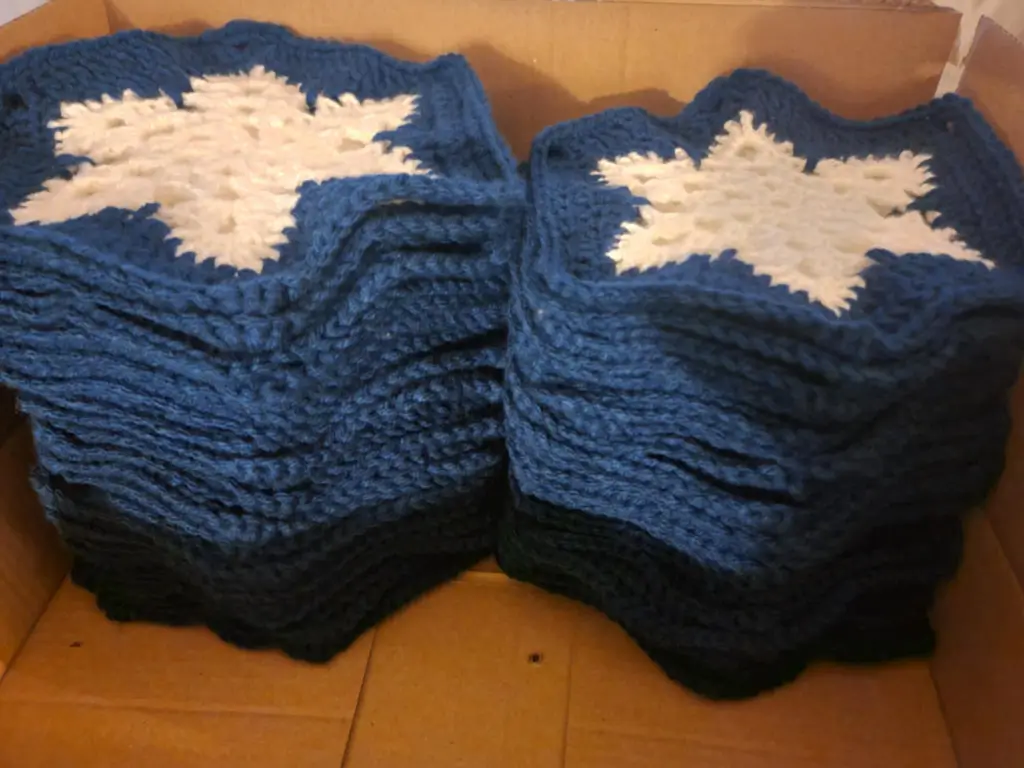
Steam blocking acrylic: WARNING: This is permanent and irreversible
- Pin project to exact measurements
- Hold iron with steam setting 1-2 inches above fabric
- Apply steam in short bursts
- NEVER let iron touch the fabric (will melt!)
- Let cool completely before unpinning
- The fabric is now “set” in this shape permanently
You're using heat to relax the plastic fibers into a new permanent shape. It can't be undone.
When to steam block acrylic:
- Lace projects that need to be opened up
- Granny square blankets that need to lay flat
- Projects where you want permanent shaping
When NOT to steam block acrylic:
- If you might want to reshape later (it's permanent!)
- Amigurumi or stuffed items (loses structure)
- Items that need to maintain elasticity
Alternative for acrylic: Spray blocking
- Pin to measurements
- Spray generously with water
- Let dry
- Results will be minimal but won't damage fiber
Pro tips:
- Test steam blocking on your gauge swatch first!
- Keep iron moving (hovering in one spot can melt the fibers)
- Less is more (you can always add more steam, but you can't undo melting)
- Super-budget acrylic may melt more easily than premium brands
Polyester
Characteristics:
- Similar to acrylic
- Even more heat-sensitive
- Very minimal response to water
- Stronger than acrylic
Best blocking method: Spray blocking only
How to block polyester:
- Pin to measurements
- Spray with water
- Let dry
- Expect minimal results
Warning: Polyester melts at lower temperatures than acrylic. Steam blocking is VERY risky. Only attempt if you've tested extensively on a gauge swatch.
Nylon
Characteristics:
- Often blended with other fibers (sock yarn!)
- Adds strength and durability
- Heat sensitive
- Minimal blocking response alone
Best blocking method: Follow the dominant fiber in the blend
Nylon blends:
- 75% wool, 25% nylon → Block as wool
- 80% acrylic, 20% nylon → Block as acrylic (carefully)
- Small percentages of nylon don't dramatically change blocking needs
Fiber Blends: The Middle Ground
Blends combine characteristics of their component fibers.
How to Approach Blends
General rule: Block according to the dominant fiber, but be aware of the secondary fiber's characteristics.
Common blends and approaches:
Cotton/Acrylic blends:
- Wet block if 50%+ cotton
- Results will be moderate (not as responsive as pure cotton)
- Can try spray + pin for minimal results with high acrylic content
Wool/Acrylic blends:
- Wet block if 50%+ wool
- Be gentler than with pure wool
- Won't felt as easily (acrylic prevents it)
- Good for beginners to blocking
Wool/Silk blends:
- Wet block like wool
- Expect luxurious drape
- Handle gently
Cotton/Linen blends:
- Wet block like cotton
- Expect excellent results
- Can use warm water
Alpaca/Merino blends:
- Wet block carefully
- Pin to exact measurements (alpaca has no memory)
- Merino adds some memory back
Reading Blend Labels (Examples)
Example: 70% Cotton, 30% Acrylic
- Dominant fiber is cotton (70%)
- Block primarily as cotton (wet blocking)
- Expect slightly less dramatic results than 100% cotton
Example: 50% Wool, 50% Acrylic
- Equal blend
- Wet blocking will work but be conservative
- Won't felt (acrylic prevents it)
- Good “training wheels” yarn
Special Cases and Tricky Fibers
Mohair and Angora
Characteristics:
- Very fuzzy/hairy
- Blocks beautifully
- Can lose definition if over-blocked
Blocking approach:
- Wet block gently
- Don't pin too aggressively (fuzzy halo will flatten)
- Expect it to “bloom” as it dries
- Creates airy, light fabric when blocked properly
Superwash Wool
Characteristics:
- Treated to prevent felting
- Can be machine washed
- Less “memory” than regular wool
- Blocks easily
Blocking approach:
- Wet block like regular wool
- Can be slightly more aggressive (won't felt)
- May grow more than regular wool
- Pin to exact measurements
Novelty Yarns (Sequins, Ribbon, etc.)
Characteristics:
- Varies wildly by type
- Often includes synthetic components
Blocking approach:
- Read the label carefully
- Test on swatch first
- Usually spray blocking is safest
- Consider not blocking at all if unsure
Quick Reference Guide
| I have… | What do I do? |
| 100% Wool | Wet block with cool water, reshape dramatically, let dry flat |
| 100% Cotton | Wet block OR steam block, don't expect huge changes, support when wet |
| 100% Acrylic | Steam block if you want permanent results, spray block if you want minimal results |
| Wool/Acrylic Blend | Wet block gently, treat like wool but easier |
| Cotton/Acrylic Blend | Wet block if 50%+ cotton, spray block if mostly acrylic |
| Bamboo/Rayon | Wet block VERY gently, handle with extreme care when wet, expect growth |
| Linen | Wet block confidently, can use warm water, gets softer each time |
| Silk | Wet block gently with cool water, avoid sun when drying |
| Superwash Wool | Wet block, can be more aggressive than regular wool |
| Alpaca | Wet block, pin to EXACT size (no memory), expect some growth |
| Not sure? | Start with spray blocking (safest), test on swatch if possible |
Testing Before You Block
Always test on your gauge swatch (you made one, right?) before blocking your full project. Don’t ruin hours/days of hard work!
The Bottom Line
Blocking isn't one-size-fits-all. The fiber content of your yarn determines which blocking method will give you the best results as well as which methods might damage your project.
Remember, for better blocking success:
- Check your yarn label for fiber content
- Match blocking method to fiber type
- Test on gauge swatch if trying something new
- Use appropriate technique
- Be patient with drying time
Some fibers are forgiving (cotton, wool blends, superwash). Others are unforgiving (alpaca, acrylic with steam). Know which ones you're working with before you start.
Your finished projects will look more professional, fit better, and last longer when you block them appropriately for their fiber content.
Your Turn
What fibers do you struggle with blocking? Have you had any blocking disasters? What's your go-to fiber for projects that need to be blocked? Share your experiences in the comments or tag me on Instagram @collectivelyhooked!
Ready to improve your finishing techniques? Check out these related posts:
- How to Block Crochet Projects – Basic blocking methods
- Advanced Yarn Label Reading – Understanding fiber content
- Yarn Choices Explained – Different fiber characteristics
Happy hooking!

Thank you for this thorough information focusing on each yarn type. It’s v important to know the yarn type for blocking, felting or washing the garment. I learned it hard way.
Same, I also learned the hard way! Thanks for reading!
This is such a full proof guide and just what I need to go back to reference to. Thank you for sharing!!!
Thank you for reading!