How to Transition from Beginner to Intermediate Crochet Pattern Reading
If you’ve ever scanned the first few rows of an intermediate crochet pattern and immediately thought, “Nope… this is way above my skill level,” you’re not alone.
The good news is that intermediate crochet patterns aren’t necessarily filled with impossible stitches. More often, they’re written with the expectation that you already understand the basics and can connect the dots without every step being explained in detail.
Beginner vs Intermediate Crochet Patterns
The transition from beginner to intermediate isn’t about learning dozens of new stitches. It’s about learning to read patterns differently. We don’t have to treat this as a completely different skill. You already know the basics of crochet and have probably followed some simple beginner patterns already, so switching to intermediate is not as difficult as we think.
Still building confidence with beginner crochet patterns? If you’re looking for extra guidance, especially if you’re a beginner or a left-handed crocheter, I recommend visiting My TasteFul Threads where you’ll find beginner-friendly tips designed to help you build a strong foundation before tackling more advanced projects, especially for left-handed crocheters!
Here are a few ways to make the transition from beginner crochet patterns to intermediate crochet patterns much easier.
DISCLOSURE: This post contains affiliate links, meaning if you click on a product or service, and decide to purchase it, I may receive a commission at no extra cost to you. All recommended products and services are based on my experience with them. For more information, please read my Disclaimer.
Stop Reading One Row at a Time
When you’re new to crochet, it’s natural to focus only on the row you’re currently working. Intermediate patterns reward you for looking at the bigger picture.
Before you grab your hook, spend a few minutes reading through the entire pattern. Look for:
- Special stitches
- Repeat sections
- Shaping instructions
- Assembly and other pattern notes
- Finishing techniques
Having a general understanding of where the project is headed helps prevent surprises halfway through.
Pro Tip: Highlight anything that seems unfamiliar so you can review it before you reach that section.
Learn to Recognize Pattern Structure
Intermediate patterns often become easier once you recognize their rhythm.
Instead of reading:
Row 8: Ch 2, dc in next 5 sts, (dc2tog, dc in next 4 sts) repeat from * to * across.
Train yourself to see:
- Beginning stitches
- Repeating section
- Ending stitches
Once you identify the repeat, you spend less time decoding every instruction and more time crocheting.
Pay Attention to Crochet Pattern Notes
Pattern notes are easy to skip, especially if you’re excited to get started. PLEASE don’t.
Many designers place important information before Row 1, including:
- Turning chain counts
- Whether chains count as stitches
- Stitch multiples
- Construction method
- Joining instructions
Those few paragraphs often answer questions that would otherwise leave you wondering if you’ve made a mistake.
Reading Crochet Stitch Counts
As projects become more complex, stitch counts become your best friend.
Checking your stitch count every few rows can help you catch mistakes before they grow into a much larger problem.
If your stitch count is off by one, it’s much easier to fix it now than twenty rows later.
How to Understand Crochet Pattern Repeats
One thing that surprises many crocheters is that intermediate patterns often look more complicated than they actually are.
A row filled with parentheses, brackets, and asterisks may only contain a short sequence that’s repeated over and over. So instead of trying to memorize the entire row, focus on learning the repeat.
Once you’ve completed the sequence a few times, the rest of the row usually falls into place.
Expect Fewer Step-by-Step Explanations
Beginner patterns often explain every detail. Intermediate patterns assume you already know things like:
- where to insert your hook
- how to identify the next stitch
- how to change colors
- how to fasten off
That doesn’t mean you’ve missed something, it simply means the designer expects you to have those foundational skills already. So if you come across a technique you haven’t used before, pause, learn it, then continue with the pattern.
Read the Pattern Like a Road Map
Instead of asking, “What do I do next?”
Start asking, “What is actually happening in this section?”
Are you:
- increasing?
- decreasing?
- shaping a sleeve?
- creating texture?
- forming a corner?
Understanding why you’re working certain stitches makes patterns much easier to follow.

Don’t Let New Terminology or Symbols Intimidate You
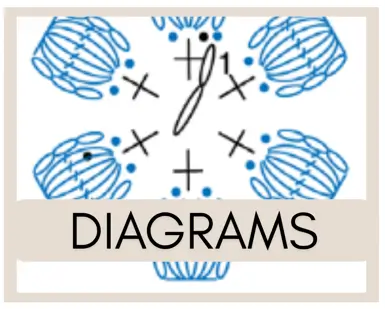
Intermediate patterns sometimes introduce unfamiliar abbreviations, symbols, or specialty stitches.
Instead of assuming the entire pattern is too advanced, remember that many of those techniques are simply combinations of stitches you already know.
Most designers include tutorials, written explanations, or links to help you learn something new along the way. There are also plenty of visual tutorials online to reference as well.
You don’t need (and are NOT expected) to know every stitch before you start.
Practice with “Stretch” Projects
One of the fastest ways to become comfortable reading intermediate patterns is to choose projects that challenge you just enough.
Instead of jumping from a beginner dishcloth to an intricate lace shawl, look for patterns that introduce only one or two new concepts. Each finished project builds confidence for the next one.
A Note About Left-Handed Crochet
I wanted to include a special note here for all of the lefties out there! Personally, I am a right-handed crocheter but I have seen and heard how difficult it can be for left-handed crocheters to adjust to right handed patterns.
It’s always helpful to identify other left handed crocheter resources to help you along the way. I highly suggest checking out My Tasteful Threads for great tips and information for left handed crocheters. For example, if you are a beginner check out the post Left Handed Crochet: Simple Tips That Actually Help Beginners. As a left-handed crocheter, the writer has wonderful insight on how to approach tools, stitches, and other related tips that can make the experience easier and more manageable.
Final Thoughts
Reading intermediate crochet patterns is less about mastering difficult stitches and more about developing confidence in how you interpret instructions.
The more patterns you read, the more you’ll begin to recognize familiar construction methods, repeats, and designer conventions.
Before long, those patterns that once looked overwhelming will feel surprisingly approachable.
Every experienced crocheter started exactly where you are now by learning to see patterns not as a list of complicated instructions, but as a series of manageable steps.
Your Turn
Have you been struggling with or want to learn how to level up your crochet pattern reading techniques? How do you currently approach new crochet patterns? Share your experiences in the comments below!
Ready to master crochet pattern reading? Check out these related posts:
- Crochet Pattern Reading Shortcuts
- Reading Crochet Stitch Diagrams vs Written Patterns: When To Use Each
- Intermediate Crocheter Mistakes: Pattern Reading Edition
Happy hooking!

Would love to start with crochet, but my hands are very shaky. Any tips?
Yes! It’s definitely doable even with shaky hands 🙂 I’m not sure of the degree of shakiness, but I would recommend using a thicker hook (both larger in size and more ergonomic grip) to keep your hands comfortable while practicing. You can also work with larger yarns to start. The larger yarns are often more forgiving because you don’t have to do any intricate detailed work. Once you get the hang of things, you can start playing with smaller hook sizes and yarns. Hope that helps! Thanks for your question!
Pattern reading has always been intimidating to me. This is such a great guide to get better at it!!
I’m glad you enjoyed it! Pattern reading can be tricky at first but once we get used to it, it just opens up so much more!
This is such encouraging advice for anyone looking to improve their crochet skills. I really like the reminder to read through the entire pattern before picking up the hook because that alone can save so much frustration later. Breaking patterns down into repeats instead of focusing on every single stitch is a great tip.
Thank you for reading, I’m glad you enjoyed it!
Greet tips! I’ve always found crochet patterns a little intimidating, especially once they become more advanced. Your explanation felt much easier to follow, and I really liked the tips about reading through the entire pattern before getting started.
Everyone feels intimidated by them at first but taking your time and the feeling of figuring it out really opens up more of the crochet world for you!
Some patterns are really confusing. I find myself re-reading and working thru a translation long hand until it makes sense. I do think people make patterns harder than they need to be. Thanks for the reminders.
I completely agree! I’ve had to do the same thing since text can always be interpreted multiple ways. Thanks for reading!
This is very encouraging. I like how you explained that moving from beginner to intermediate crochet is more about understanding patterns differently than learning a long list of new stitches. That makes the next level feel much less intimidating. My TasteFul Threads also sounds like a helpful resource, especially for beginners and left handed crocheters who may need a little extra guidance.
Thank you for reading! Moving from beginner to intermediate pattern reading is more similar than people think 🙂 but I also think it’s human nature to automatically assume the “next level” of something will be much harder (which is not always true!)