Crochet Pattern Reading Shortcuts: Speed Up Your Crochet Comprehension
You’ve got the basics of reading a written pattern and know your abbreviations. You understand asterisks mean “repeat this,” and you’re comfortable with the format. But you still find yourself re-reading the same line three times before you crochet it, or losing your place every time you look up.
Here’s the good news: once you’re comfortable with the fundamentals, there are shortcuts that experienced crocheters use to read patterns faster and more fluidly (almost like reading a language instead of decoding one).
This post isn’t about learning what abbreviations mean (check out my Tips on How to Read a Crochet Pattern post for that). It’s about the mental shortcuts and pattern tricks that help you move through instructions faster once you already know the basics.
DISCLOSURE: This post contains affiliate links, meaning if you click on a product or service, and decide to purchase it, I may receive a commission at no extra cost to you. All recommended products and services are based on my experience with them. For more information, please read my Disclaimer.
Why Speed Matters (And When It Doesn’t)
Speed-reading a pattern isn’t about rushing through your project. It’s about spending less mental energy DECODING the pattern so you have more energy for actually crocheting and enjoying the process.
Faster crochet pattern reading helps you:
- Stay in a rhythm instead of stopping and starting
- Reduce frustration with dense instructions
- Catch your place again quickly after interruptions
- Work on portable projects without needing to concentrate as hard
- Recognize pattern structures across different designers
This isn’t about:
- Skimming so fast you make mistakes
- Skipping important notes or special instructions
- Rushing complicated new techniques you haven’t tried before
Save your speed-reading skills for patterns using techniques you already know. Slow down for anything genuinely new.
Shortcut 1: Recognize Repeat Notation Patterns
Once you’ve seen enough patterns, certain notations become instantly recognizable instead of requiring translation each time.
The Asterisk-to-Repeat Pattern
Instead of reading character by character, train your eye to spot the whole chunk:
What you see: *sc in next 3 sts, ch 2, sk next st; rep from * around
What experienced readers do: Recognize this as “one visual chunk” meaning “repeat this whole group.” You’re not re-reading each abbreviation, you’re recognizing a part of instruction you’ve seen hundreds of times.
How to build this skill:
- Notice when repeat sections have a similar “shape” to ones you’ve done before
- Instead of reading start-to-finish every time, glance at the whole repeat first to get the gist
- Then execute stitch by stitch
Bracket and Parenthesis Nesting
Patterns often stack repeats within repeats using different symbols:
What you see: [(sc, ch 1, sc) in next st, ch 2] 4 times
Speed-reading approach:
- Identify the innermost instruction first: (sc, ch 1, sc) in next st
- Then the next layer: , ch 2]
- Then the repetition: 4 times
Practice tip: Use different colored highlighters for different bracket levels when you’re first learning a complex pattern. Eventually you won’t need the highlighters. Your brain will get through the rest automatically.
Shortcut 2: Chunk Common Stitch Combinations
Certain stitch combinations appear so frequently that recognizing them as a single unit (rather than three separate stitches) speeds up your reading dramatically.
Common Chunks to Recognize
“Shell” combinations: (dc, ch 1, dc) or (2 dc, ch 2, 2 dc) — once you’ve made shells before, your brain should recognize this pattern instantly rather than reading it as separate instructions.
“V-stitch” combinations: (dc, ch 1, dc) in same st — similar to shells but worked in a single stitch
Corner increases: (sc, ch 2, sc) in corner st — extremely common in granny squares and worked-flat projects
Standard decreases: sc2tog or hdc2tog — recognize these as “one unit that makes two stitches into one” rather than decoding the mechanics every time.
Building this skill: The more you crochet, the more these become automatic. But you can speed up the process by specifically noticing when you’re seeing a “shape” you recognize from previous projects.
Shortcut 3: Create Your Own Shorthand Annotations
Professional pattern-readers often mark up patterns with personal shorthand that speeds up future reference.
Annotation Ideas
Circle or box the stitch count: Makes it instantly visible without searching the line for numbers buried in text.
Draw arrows for direction changes: When a pattern says “turn,” a simple arrow can be faster to spot than the word itself.
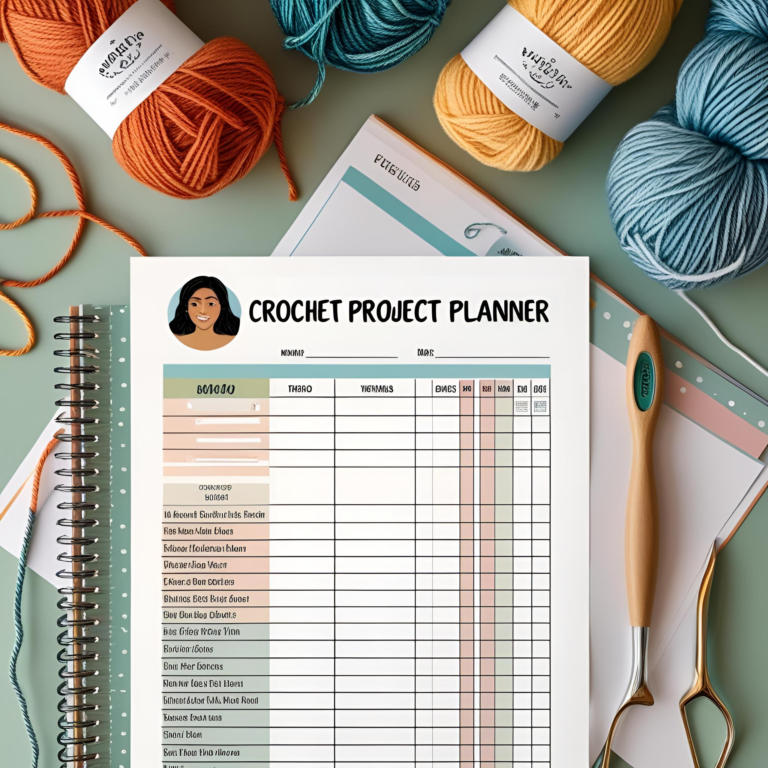
Star or highlight your current row: Especially helpful when returning to a project after a break; your eye goes straight to where you left off.
Number the repeats as you complete them: If working rep from * 6 times, make 6 tally marks and cross one off after each repeat. Faster than mental counting.
Use sticky notes or pattern-specific bookmarks: Physically mark your place so you’re not searching for it.

Digital Annotation Options
If working from a PDF or app:
- Use highlighting tools to color-code sections
- Add digital sticky notes for personal reminders
- Bookmark specific pages/rows for quick navigation
- Use “find” function to jump to specific terms
Shortcut 4: Read Ahead Strategically
Instead of reading one line, crocheting it, then reading the next line, train yourself to read slightly ahead.
The One-Row-Ahead Method
How it works: While crocheting the current row, glance at the next row. This lets you:
- Anticipate any special techniques coming up
- Notice if you need to switch colors, hooks, or techniques
- Prepare mentally for what’s next
Why this helps: You’re never caught off guard by an unexpected instruction, and the transition between rows feels smoother.
The Whole-Section Preview
Before starting a new section of a pattern (like starting the sleeves after finishing the body), skim the ENTIRE section first.
What to look for:
- Overall structure (how many rows/rounds)
- Any special techniques you’ll need
- Stitch count changes
- Where the section ends
This “big picture first” approach means you’re not surprised by what’s coming and can mentally prepare for the work ahead.
Shortcut 5: Master Pattern-Specific Vocabulary Quickly
Every designer has their own style of writing patterns. Learning to quickly identify a NEW designer’s patterns saves time on future projects from that same designer.
What to Notice
Their repeat notation style: Some use asterisks, others use brackets exclusively, others mix both
Their stitch count reporting: Some report count after every row, others only at pattern-relevant checkpoints
Their special term definitions: Many designers create custom stitch combinations with their own names (defined at the pattern’s start)
Their formatting conventions: Some bold stitch counts, others italicize special notes
Why this matters: Once you’ve worked 2-3 patterns from the same designer, you’ll read their subsequent patterns much faster because you already understand their “language.”
Shortcut 6: Use Technology to Your Advantage
Modern tools can speed up pattern comprehension significantly.
Helpful Digital Tools
Text-to-speech: Some crocheters have their phone read patterns aloud while they work, keeping hands free and eyes on their project instead of switching between pattern and stitches.
Pattern-specific apps: Some apps allow row-by-row tracking with automatic highlighting of your current row.
PDF annotation apps: Allow digital highlighting, notes, and bookmarking without printing.
Voice notes: Record yourself reading through a tricky section once, then play it back while crocheting instead of reading repeatedly.
Physical Tools That Speed Reading
Row counter with built-in pattern holder: Keeps your place automatically as you count rows.
Magnetic board with strips: Move a magnetic strip down the pattern line by line, keeping your place without losing it.
Pattern holder clips or stands: Keep pattern at eye level, reducing time spent looking down and finding your place.
Shortcut 7: Recognize When NOT to Speed Read
Speed-reading shortcuts are powerful, but they’re not appropriate for every situation.
When To Slow Down
Techniques you’ve never tried: New stitches, new construction methods, or unfamiliar terminology need careful, full reading.
Critical shaping sections: Armholes, necklines, and other fit-critical areas deserve full attention, not speed-reading.
Pattern notes and special instructions: These often contain crucial information that doesn’t fit the “predictable pattern” mold.
When something feels off: If your stitch count doesn’t match or something seems wrong, STOP speed-reading and carefully re-read from the last checkpoint.
Complex charts or complicated repeats: Some patterns are complex enough that shortcuts could cause errors. When in doubt, read fully.
Building Your Speed-Reading Skills Over Time
Like any skill, pattern speed-reading develops with practice.
Practice Strategies
Start with patterns similar to ones you’ve made: Recognizing familiar structures is easier when the pattern resembles previous projects.
Deliberately notice patterns in patterns: When you complete a project, think about what structures you now recognize that you didn’t before.
Work with one designer repeatedly: This builds familiarity with their specific style, accelerating your reading of their future patterns.
Don’t force it: Speed comes naturally with repetition. Trying to force yourself to read faster than you’re ready for leads to mistakes.
The Bottom Line
Pattern reading shortcuts aren’t about skipping steps or rushing carelessly—they’re about building enough pattern literacy that your brain processes common structures automatically, freeing up mental energy for the parts that actually need your full attention.
These skills develop naturally with experience, but being intentional about noticing patterns-within-patterns, creating personal annotation systems, and practicing predictive reading can accelerate your progress.
Give yourself grace as you build these skills. Even experienced crocheters slow down for unfamiliar techniques or complex sections. The goal isn’t to read everything instantly—it’s to read efficiently enough that pattern-following becomes a smooth part of your crochet process rather than a constant obstacle.
Your Turn
What pattern-reading shortcuts have you developed? Do you have a personal annotation system? Which designers do you find easiest to read quickly once you know their style? Share your tips in the comments!
Ready to strengthen your pattern skills? Check out these related posts:
- Tips on How to Read a Crochet Pattern – Foundational pattern reading skills
- Beginner Written Crochet Pattern Walk-through – Step-by-step pattern breakdown
- Lost Count Syndrome – Solving stitch counting struggles
- Crochet Diagrams vs Written Patterns – Choosing the right format
Happy hooking!


This was really helpful! I like that you focused on what comes after learning the basics. I can definitely see how it’s easy to keep rereading the same line or lose your place in a pattern. Your tips for reading patterns more smoothly make the whole process seem much less intimidating. Thanks for sharing these practical ideas.
You are very welcome! Even the best of us have moments where we are rereading something, so definitely find what works for you and don’t get discouraged! Thanks for reading! 🙂
Definitely saving to remember all this.
Thanks for reading! 🙂
I have to admit – crochet abbreviations have always intimidated me. Thanks for the helpful guide. Will be coming back to reference this often!
Sometimes they really do feel like a foreign language but I feel like (as humans) we like to over-complicate things sometimes. Having some shortcuts you can try out or use when needed takes some of the pressure off! Thanks for reading!
Thanks for the tip reminders. I had forgotten some of these things and find myself re-reading a step a few times. 🙂
Refreshers are so helpful 🙂 Thanks for reading!
This makes so much logical sense. Why didn’t I think of this? Thanks for the tips.
Sometimes we already know these things but need to hear it from someone else for it to click, am I right?