
International Pattern Terms: US vs UK Crochet Conversions
Picture this: you find a gorgeous pattern online. The designer is clearly talented, the finished project photos are stunning, and you're ready to start. Then you read the first line: “dc2tog” and you make what you think is a double crochet decrease… except the pattern was written in UK terms, where “dc” means something completely different than you expect.
Suddenly your gauge is off, your project looks wrong, and you're confused about what went wrong.
Welcome to one of the most common (and most frustrating) challenges for crocheters working with patterns from different English-speaking countries: the US vs UK terminology difference.
As an intermediate crocheter expanding your pattern library, understanding these conversions isn't optional anymore. Designers from the UK, Australia, and other countries create beautiful patterns, and you deserve access to all of them! Let's break down exactly what's different and how to navigate it confidently.
DISCLOSURE: This post contains affiliate links, meaning if you click on a product or service, and decide to purchase it, I may receive a commission at no extra cost to you. All recommended products and services are based on my experience with them. For more information, please read my Disclaimer.
Why Does This Confusing System Even Exist?
Crochet terminology has developed somewhat independently in different English-speaking regions. The US developed one naming convention; the UK (and by extension, Australia, New Zealand, and other Commonwealth countries) developed another. Neither is “correct”, they're just different traditions that never got standardized globally.
The core problem: The same WORD means a DIFFERENT STITCH depending on which system the designer used.
This isn't like measuring conversions (inches to centimeters, etc.) where you're translating between two different units. This is more like two people using the same word to mean different things entirely.
The Complete US to UK Conversion Chart
Here's the essential conversion information you need:
| US Term | UK Term |
| Slip Stitch (sl st) | Slip Stitch (sl st) |
| Single Crochet (sc) | Double Crochet (dc) |
| Half Double Crochet (hdc) | Half Treble Crochet (htr) |
| Double Crochet (dc) | Treble Crochet (tr) |
| Treble Crochet (tr) | Double Treble Crochet (dtr) |
| Double Treble Crochet (dtr) | Triple Treble Crochet (trtr) |
Notice the pattern: Every stitch shifts by “one level” between systems. What Americans call “single crochet,” the UK calls “double crochet.” What Americans call “double crochet,” the UK calls “treble crochet.” This consistent shift is actually helpful once you understand it.
The Memory Trick That Actually Works
Instead of memorizing the whole chart, learn this simple concept:
UK terms are “one step up” from US terms.
If you see “dc” in a UK pattern, mentally shift it down one level to get the US equivalent (US sc). If you see “tr” in a UK pattern, shift down one level to get US dc.
“Single” doesn't exist in UK terminology. If you see “single crochet” specifically labeled with that phrase, you know it's from a US pattern. UK patterns start their naming at “double crochet” for the most basic stitch.
How to Identify Which System a Pattern Uses
Before you start crocheting, determine which terminology system you're working with.
Clues That Point to US Terms
- The pattern explicitly states “US terms”
- You see “single crochet” or “sc” used prominently
- The pattern is from a well-known US designer or US-based magazine/website
- Measurements are given in inches
Clues That Point to UK Terms
- The pattern explicitly states “UK terms”
- You see “double crochet” used for what seems like a very basic, foundational stitch
- The designer is UK, Australian, or from another Commonwealth country
- Measurements are given in centimeters (though this isn't a perfect indicator, as many designers use both)
- You see the abbreviation “dc” used in a way that seems too “early” in the pattern for it to be a double crochet in US terms
When It's Not Obvious
Read the pattern notes. Most well-written patterns state their terminology system near the beginning, often right after the materials list.
Check the yarn weight system used. UK patterns sometimes (not always) use different yarn weight naming (4-ply, double knit/DK, aran, chunky) compared to US weight categories (fingering, sport, worsted, bulky). This can sometimes be another clue.
Look at the designer's location. Check their “about” page or social media bio. This isn't foolproof (designers move, or write in a system different from their home country), but it's a helpful clue.
When truly unclear: Look at the FIRST stitch instruction in the pattern. If it starts with very simple single-loop stitches called “double crochet,” you're likely looking at UK terms.
Converting a Full Pattern: Step-by-Step
Let's walk through actually converting a pattern excerpt.
Original UK pattern excerpt: “Row 1: 1 dc in each st across. Row 2: 1 htr in first st, *1 dc, 1 htr; rep from * across.”
Step 1: Identify all stitch abbreviations used
- dc (UK) = double crochet
- htr (UK) = half treble crochet
Step 2: Convert each to US equivalent
- dc (UK) → sc (US)
- htr (UK) → hdc (US)
Step 3: Rewrite in US terms “Row 1: 1 sc in each st across. Row 2: 1 hdc in first st, *1 sc, 1 hdc; rep from * across.”
That's it! Once you know the conversion, you're simply substituting terms while keeping the pattern structure identical.
Special Considerations Beyond Basic Stitches
The basic stitch conversion chart handles most situations, but a few other areas need attention too.
Decreases and Increases
Decreases and increases are typically named based on the stitch they're built from, so they follow the same conversion pattern:
US “sc2tog” (single crochet 2 together) = UK “dc2tog” (double crochet 2 together)
US “hdc2tog” = UK “htr2tog”
US “dc2tog” = UK “tr2tog”
The same “one level shift” applies here too.
Yarn Over (US) vs Yarn Round Hook (UK)
US: “Yarn over” (yo) UK: “Yarn round hook” (yrh) or sometimes “yarn over hook” (yoh)
These mean the exact same action where you are wrapping yarn around your hook. The terminology is just different.
Gauge vs Tension
US: “Gauge” UK: “Tension”
When a UK pattern says “check your tension,” they often mean what Americans call “gauge” (the stitch and row count per inch/cm). This isn't about how tightly you hold your yarn (which Americans might also call “tension” in a different context),it's specifically about matching the pattern's stitch density.

Common Mistakes When Converting
Mistake 1: Only Converting Some Stitches
If a pattern uses multiple stitch types, you must convert ALL of them. Missing even one stitch abbreviation creates confusion partway through your project.
Solution: Before starting, scan the entire pattern for every stitch abbreviation used, then convert each one.
Mistake 2: Assuming All “dc” Means the Same Thing
This is the most common and costly mistake. Seeing “dc” and assuming it's always the US double crochet, regardless of the pattern's origin.
Solution: Always confirm terminology system FIRST, before looking at any stitch instructions.
Mistake 3: Not Converting Special/Combined Stitches
Complex stitches (like “puff stitch” or “cluster”) are often built from basic stitches. If the pattern defines these using UK terminology internally, you need to convert the basic stitches within the special stitch definition too.
Example: UK pattern defines: “Puff st: (yrh, insert hook, yrh, pull through) 3 times in same st, yrh, pull through all loops”
This doesn't actually need stitch-name conversion since it's describing the mechanic, not naming a stitch category. But if a special stitch is defined AS a combination of named stitches (like “shell = 3dc in same st” in UK terms), you need to convert that “dc” too.
Mistake 4: Forgetting About Half Double/Half Treble
This is a stitch many crocheters forget to convert because it “sounds similar” in both systems. Double-check this one specifically: hdc and htr are NOT interchangeable; they represent the same stitch but with different names.
Tools and Resources for Conversion
Printable Conversion Charts
Keep a simple conversion chart printed and stored with your crochet supplies. When working from an international pattern, you can quickly reference it without searching online each time.
Browser Bookmarks
Bookmark a reliable conversion chart webpage for quick access when working digitally.
Pattern Annotation
When you determine a pattern's terminology system, write it directly on your printed pattern or in your digital notes: “This pattern uses UK terms” as a reminder throughout your project.
Building Personal Fluency
The more international patterns you work with, the more these conversions become second nature. Many experienced crocheters can read either system fluently without needing to consciously convert, they just recognize “dc” means different things in different contexts and adjust automatically.
Practice Makes Fluent
Start Small
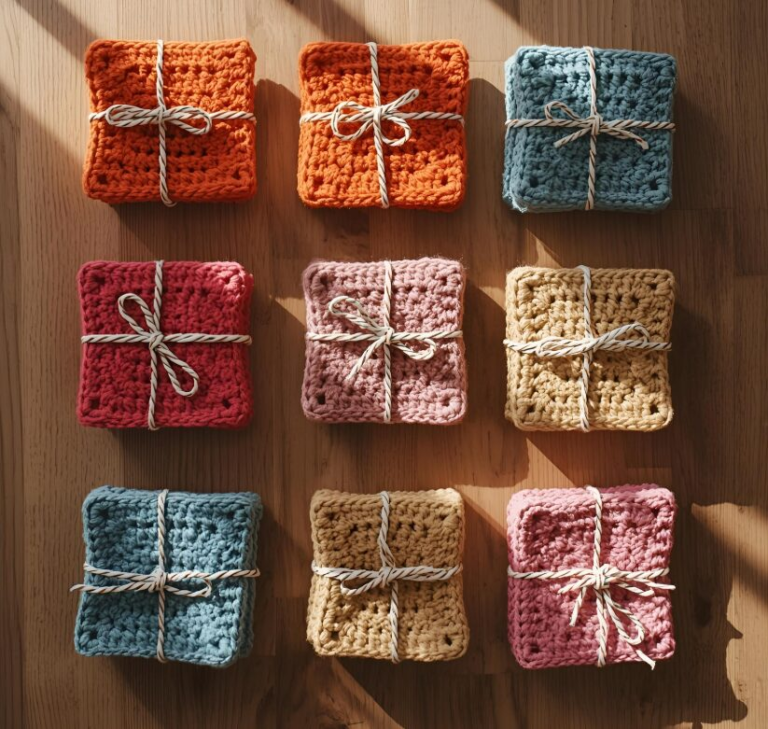
Choose a simple UK-terminology pattern (a basic dishcloth or coaster) to practice converting. Small projects let you build confidence without a large investment if you make conversion errors while learning.
Convert Before You Start, Not As You Go
For your first several international patterns, fully convert the entire pattern to your preferred terminology BEFORE beginning to crochet. This prevents mid-project confusion and lets you catch any missed conversions early.
Keep Notes on Designers
If you find a designer whose patterns you love but who writes in a different terminology system than you're used to, keep a note. You'll know to convert their patterns automatically in the future.
When You Might NOT Need to Convert
Sometimes, understanding the difference is enough without full conversion.
If you're bilingual in both systems: Some experienced crocheters simply learn to work fluently in whichever system a pattern uses, without mental conversion. This comes with lots of practice.
If a pattern includes both: Increasingly, thoughtful designers provide patterns with both US and UK terms listed, or offer downloadable versions in each. Always check if this option exists before manually converting.
If you're using a stitch dictionary: Some modern stitch dictionaries describe stitches by their construction mechanics rather than by actual name, sidestepping the terminology issue entirely.
Beyond US/UK: Other International Considerations
While US/UK is the most common terminology divide English-speaking crocheters encounter, be aware that patterns from non-English-speaking countries present additional considerations.
Symbol/chart patterns: Many non-English patterns use crochet diagrams (charts) with international symbols rather than written instructions. If you're comfortable reading diagrams, this can actually be easier than translating written instructions.
Translated patterns: When patterns are translated from other languages, occasionally terminology gets mixed between US and UK conventions inconsistently. If a translated pattern seems confusing or inconsistent, this might be why. Double-check unusual stitch combinations against the finished project photos.
The Bottom Line
The US/UK terminology difference is one of those crochet quirks that seems confusing until you understand the simple underlying pattern: UK terms shift “one level up” from US terms. Once you internalize this concept, converting patterns becomes a quick, almost automatic process.
Don't avoid patterns just because they're written with different terminology. With this conversion knowledge, you have access to a much wider world of crochet designs from talented creators everywhere.
Keep this conversion information handy, practice with a few small projects, and soon you'll navigate international patterns with confidence.
Your Turn
Have you worked with patterns using different terminology? Any conversion mix-ups you've experienced? Do you have a designer whose patterns you love from a different terminology system? Share your experiences in the comments!
Ready to expand your pattern sources? Check out these related posts:
- How to Read Crochet Diagrams – Diagrams can sidestep terminology issues
- Crochet Diagrams vs Written Patterns – Choosing the right format
- Pattern Reading Shortcuts – Speed up your comprehension
- Advanced Yarn Label Reading – Understanding yarn weight differences globally
Happy hooking!

Definitely going to keep this for later! Thanks for the great info!!
You’re very welcome and thanks for reading! 🙂
I’m love it. Translations are hard and if you don’t have a list in front of you – you can very easily get mixed up. Thanks for this.
Definitely! I keep a cheat sheet of these conversions in my project bag for this exact reason.
I had no idea crochet terms were different in the US and UK. I learned something new today. Thank you so much for sharing this.
It’s definitely something we have to keep in mind when reading a pattern from a designer that is new to us. Thanks for reading!