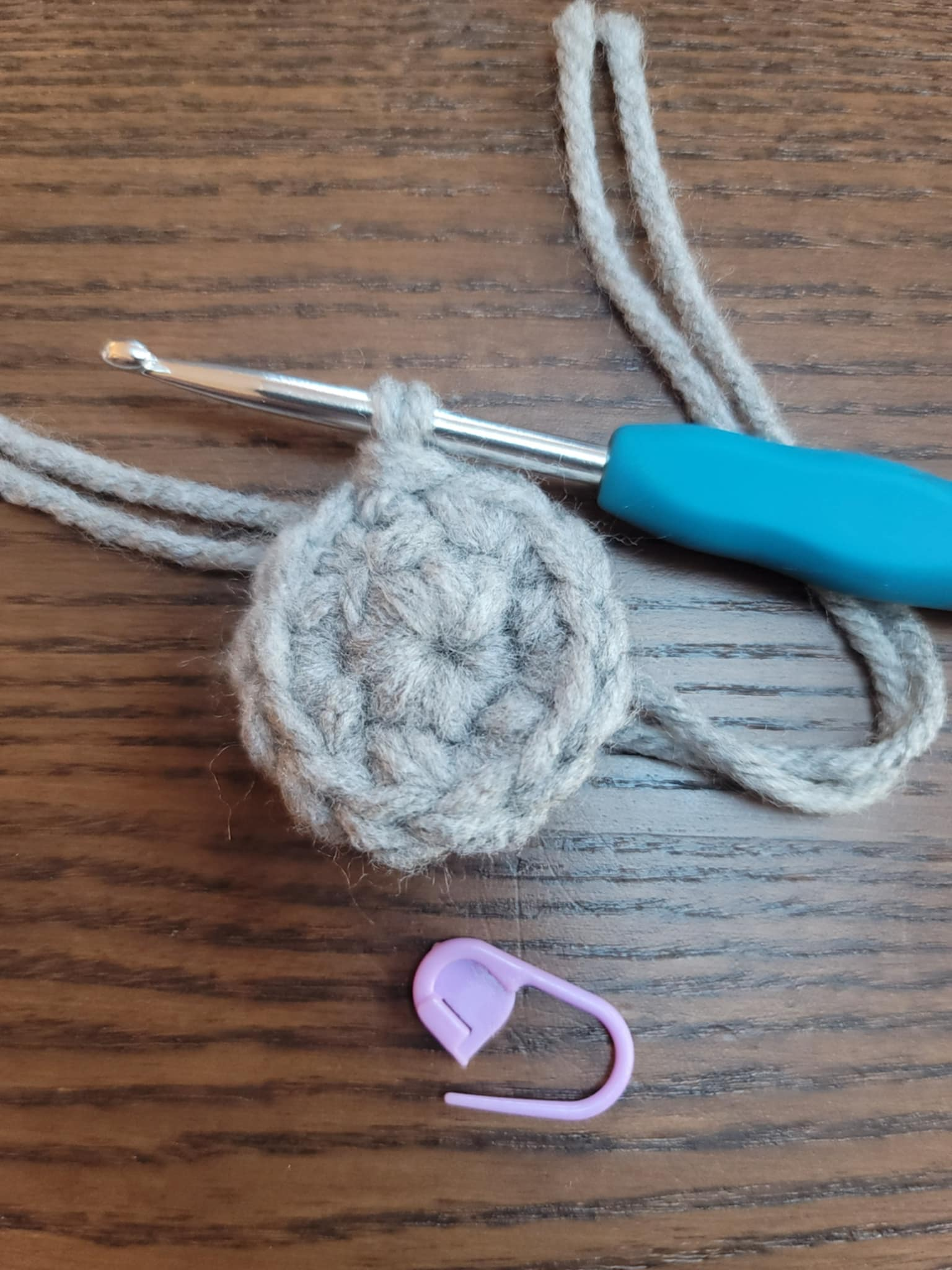
Working with Multiple Strands: Techniques for Holding Yarns Together
You’ve found the perfect pattern, but it calls for bulky weight yarn and you only have worsted. Or you want to create a custom color combination that doesn’t exist. Maybe you’re trying to use up partial skeins from your stash. The solution to all of these? Working with multiple strands of yarn together as you crochet.
Working with two, three, or even more strands simultaneously opens up your creative potential and practical solutions. But it also comes with challenges (tangling, tension issues, and managing multiple balls of yarn). As an intermediate crocheter, mastering working with multiple strand techniques will expand what you can create and help you make the most of your stash.
Let’s dive into everything you need to know about working with multiple strands of yarn.
DISCLOSURE: This post contains affiliate links, meaning if you click on a product or service, and decide to purchase it, I may receive a commission at no extra cost to you. All recommended products and services are based on my experience with them. For more information, please read my Disclaimer.
Why Work with Multiple Strands?
Before we get into the how, let’s talk about the why.
Create custom yarn weights: Don’t have bulky yarn? Hold two worsted strands together. Need something between DK and worsted? Hold DK and lace weight together. You can create any weight you need from what you already own.
Design unique color combinations: Combine two or more colors to create effects you can’t buy. Bold color blocking or gentle gradients, etc. , all possible by choosing which strands to combine.
Use up partial skeins: Have three partial skeins of similar colors? Hold them together for a project instead of letting them sit unused in your stash.
Achieve specific textures: Combining different fiber types (cotton + metallic, wool + mohair) creates unique textures and visual interest.
Make projects sturdier: Bags, rugs, and other high-use items benefit from the extra strength of multiple strands.
Work projects faster: Thicker “yarn” means fewer stitches to achieve the same size, so projects work up more quickly.
Understanding Yarn Weight Math
When you hold strands together, you’re creating a new yarn weight. Always swatch to confirm the gauge when working multiple yarn strands. When in doubt, your swatch will tell you if the yarn combination you chose works for your pattern.
Methods for Managing Multiple Strands
How you feed your yarn determines how frustrating the experience will be.
Method 1: Center-Pull + Outer End (Same Skein)
What it is: Pull from both the center and outside of the same skein
Best for:
- Working with 2 strands of identical yarn
- When you only need one skein total
- Quick projects
How to do it:
- Find the center-pull end of your skein
- Pull it out along with some yarn
- Hold the center end and outer end together
- Crochet with both strands as one
Pros:
- Only need one skein
- Strands stay together naturally
- Minimal tangling
Cons:
- Skein can collapse as you work (gets floppy)
- Can’t use with non-center-pull skeins
- Only works for 2 strands
- A headache if the center pull leads to yarn barf!
Pro tip: Put the collapsing skein in a bowl or small basket to contain it.
Method 2: Two Separate Skeins/Balls
What it is: Use different skeins, each feeding independently
Best for:
- Different colors
- Large projects requiring multiple skeins
- When you want more control over each strand
How to do it:
- Place skeins in separate locations or containers
- Pull one strand from each
- Hold strands together and crochet
Pros:
- Works with any number of strands
- Can use different colors/weights
- Skeins stay intact and organized
Cons:
- Strands can tangle as they cross
- Need dedicated space for multiple skeins
- More setup required
Pro tip: Use a yarn bowl or dedicated containers for each skein to prevent rolling.
Method 3: Pre-Wound into One Ball
What it is: Wind multiple strands together into a single ball before starting
Best for:
- Smaller projects
- When you want minimal ongoing management
- Portable projects
How to do it:
- Hold all strands together
- Wind them simultaneously into a ball (by hand or with ball winder)
- Crochet from the combined ball
Pros:
- Treat it like single yarn once wound
- No tangling while working
- Very portable
Cons:
- Time-consuming to wind
- Can’t separate strands if you change your mind
- Strands may not feed evenly from ball
Pro tip: Wind loosely to avoid stretching the yarn.
Method 4: Yarn Dispenser/Holder
What it is: Use a specialized tool that holds multiple skeins and feeds them without tangling. These items can be bought in stores or made as a homemade DIY solution.
Best for:
- People who frequently work with multiple strands
- Large projects
- More than 2 strands
Pros:
- Prevents tangling effectively
- Professional solution
- Accommodates many strands
Cons:
- Requires purchasing or making a dispenser
- Not portable
- Setup time
Techniques for Working with Multiple Strands
Once you’ve got your yarn management sorted, here are ways to actually crochet with them.
Treating Strands as One
The golden rule: Crochet with multiple strands exactly as you would with a single strand.
What this means:
- Insert hook through all strands
- Yarn over with all strands
- Pull through all strands
- Complete stitches as normal
The strands should stay together throughout every step.

Maintaining Even Tension
Challenge: Different strands can have different tension, creating loose or uneven stitches.
Solutions:
- Tension check: Every few stitches, give a gentle tug on all strands to ensure they’re feeding evenly.
- Adjust your grip: Hold all strands together firmly before making each stitch. They should feel like one thick strand, not separate strings.
- Consistent feeding: Make sure each strand is feeding freely from its source. If one is catching or dragging, fix it immediately.
- Practice on a swatch: Your first multi-strand project shouldn’t be a sweater. Make a practice swatch to get comfortable.
Starting and Ending
Starting your project:
Whether you use the slip knot method or magic circle, remember to keep multiple strands together as one.
Weaving in ends:
You have two options:
- Weave strands together: Treat the multiple ends as one thick strand and weave them in together.
- Weave strands separately: Split the strands and weave each one independently in different directions for extra security.
The method you choose may change with each project depending on your preferences for the finished look.
Troubleshooting Common Problems
Problem 1: Strands Keep Tangling
Causes:
- Skeins placed too close together
- No containment system
- Yarn being pulled at different rates
Solutions:
- Separate skeins into individual containers
- Use a yarn dispenser or other DIY holder
- Work standing up so skeins hang freely
- Stop every 10-15 minutes to untangle before it gets bad
Prevention is easier than fixing: Set up a good system from the start!
Problem 2: One Strand Runs Out Before Others
Cause: You’re using different amounts of each yarn (shouldn’t happen if they’re feeding evenly)
Solutions:
- Check that all strands are feeding from the same part of their skeins (all from center or all from outside)
- Make sure you’re not accidentally dropping one strand mid-stitch
- Verify strands are truly the same length when you start
If it happens: You can either:
- Join a new strand of the color that ran out
- Accept the slight variation (sometimes it’s barely noticeable)
Problem 3: Tension Is Uneven Between Strands
What this looks like: One strand appears looser than the other, creating a bumpy or uneven fabric.
Solutions:
- Grip all strands together more firmly
- Adjust how you’re holding the yarn
- Make sure each strand feeds with equal resistance
- Practice! This gets easier the more you do it
Some unevenness is normal when strands are very different (cotton + mohair, for example). The texture variation can be a feature, not a bug.
Problem 4: Can’t Get Correct Gauge
Cause: The combined strands don’t exactly match the pattern’s yarn weight.
Solutions:
- Try a different hook size
- Add or remove a strand
- Substitute different weight combinations
- Accept that you might need to adjust pattern sizing
This is why swatching is non-negotiable with multi-strand work.
Problem 5: Ends Are Bulky
What this looks like: When you weave in multiple ends together, there’s a visible lump.
Solutions:
- Split the strands and weave each separately in different directions
- Trim ends closer (if the fiber allows it)
- Place ends on the wrong side or in seams where they won’t show
- For amigurumi: keep ends inside the stuffing
Fun Multi-strand Techniques
Let’s talk about fun ways to use multi-strand techniques.
Custom Colorways
- Heathered effects: Combine similar colors in the same family (light blue + dark blue) for a subtle heathered (speckled or multi-toned) look.
- Contrast effects: Combine opposite colors (black + white, red + green) for bold, graphic results.
- Gradient transitions: Hold consistent Color A while changing Color B gradually through a color family.
Example gradient:
- Section 1: Navy + navy (solid navy)
- Section 2: Navy + medium blue
- Section 3: Navy + light blue
- Section 4: Medium blue + light blue
- Section 5: Light blue + light blue (solid light blue)
Texture Combinations
There are endless possibilities when combining yarns. Here are some ideas:
- Smooth + textured: Combine smooth yarn with textured yarn
- Matte + shiny: Pair wool with silk or add metallic thread to any yarn
- Thick + thin: Combine bulky with lace weight for interesting dimension
Combinations like these create fabrics you literally cannot buy.
Stash-Busting
Use up partial skeins:
Example: You have 100 yards each of 3 different blue worsted yarns.
- Hold all 3 together = ~chunky weight
- Work until you run out
- You used 300 yards of stash yarn!
Coordinating scraps: Gather similar-color partial skeins and hold them together for a variegated effect.
Choosing the Right Hook
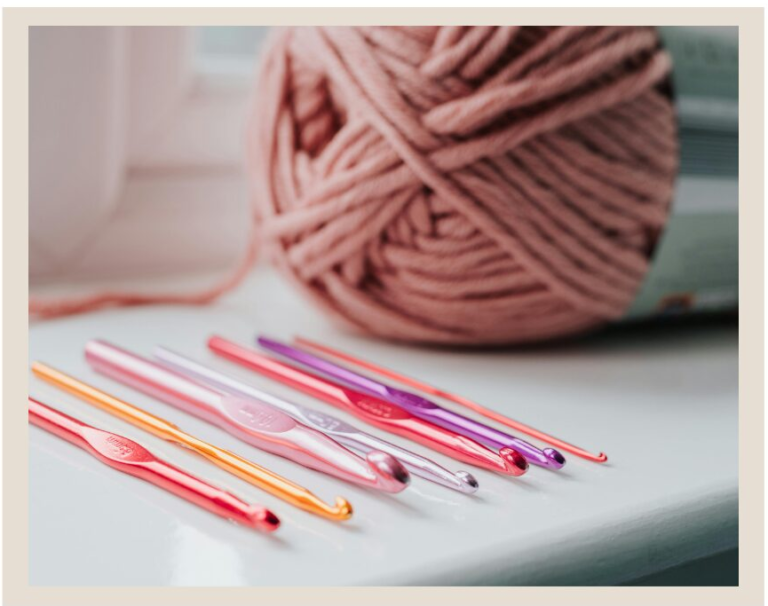
When working with multiple strands, you need a larger hook than you’d use for a single strand. Be sure to test out different hooks using gauges/swatches to figure out which hook works best for your project.
Consider ergonomic hooks: Multiple strands put more stress on your hands. An ergonomic grip can help.
RELATED: Choosing The Best Beginner Crochet Hook (a great reference for any skill level!)
Project Suitability
Not every project is ideal for multi-strand work.
Great for Multi-Strand
Blankets:
- Work up faster
- Extra warmth from doubled yarn
- Forgiving if tension varies slightly
Bags and totes:
- Extra strength from multiple strands
- Sturdy structure
- Color combinations create interest
Quick gifts:
- Scarves, cowls, hats work up fast with doubled yarn
- Impressive texture
Home decor:
- Baskets, rugs, plant hangers
- Benefit from extra structure
Long story short, use your judgment. Some intermediate crocheters successfully make garments with multiple strands (it’s not forbidden, just trickier).
When Multiple Strands Won’t Work
Be honest about limitations!
- You can’t perfectly match every yarn weight this way. Sometimes the math just doesn’t work out. Accept that and choose a different solution.
- Some fiber combinations don’t play well together. Super stretchy + non-stretchy can create weird fabric. Swatch to test compatibility.
- It adds weight. A blanket with 3 strands of worsted will be HEAVY. Make sure that’s what you want.
- It’s not always cheaper. Yes, you’re using stash yarn, but you’re using MORE of it. Sometimes buying the right weight yarn is actually more economical.
My Multi-Strand Journey
Want some practice with an existing and tested pattern? Check out the Tabletop Scrap Bin with Lid pattern in the shop!
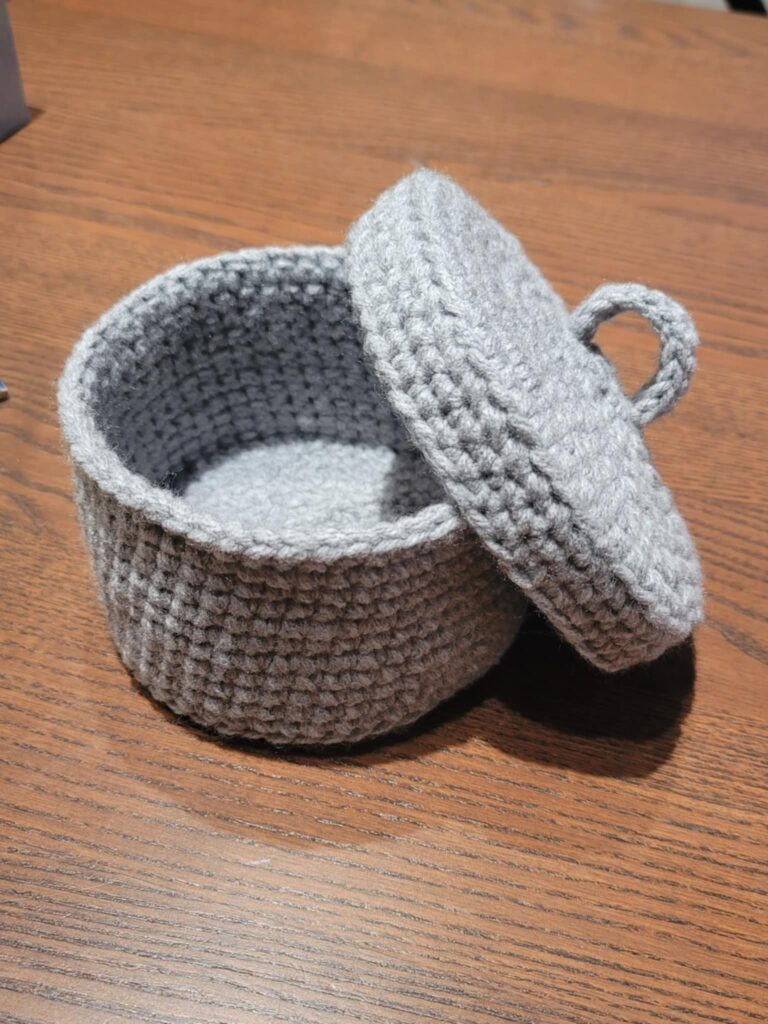
This is a perfect multi-strand project to practice with and the finished item is something that has multiple uses! It’s a win win!
The Bottom Line
Working with multiple strands isn’t just doubling your yarn, it’s a technique that opens up creative possibilities and practical solutions.
Start simple:
- Begin with 2 strands of the same yarn in the same color
- Use the center-pull + outer end method
- Make a small practice project
Build your skills:
- Try mixing colors
- Experiment with different yarn weights together
- Develop a management system that works for you
Get creative:
- Design custom colorways
- Use up your stash strategically
- Create textures that don’t exist commercially
The key is managing the strands effectively. Once you have a system that prevents tangling and maintains even tension, multi-strand crochet is just regular crochet with thicker “yarn.”
Your stash will thank you, your projects will have more personality, and you’ll have another tool in your intermediate crochet toolkit.
Your Turn
Do you work with multiple strands? What’s your yarn management system? Any tips I missed? Have you created any unique color combinations? Share your experiences in the comments or tag me on Instagram @collectivelyhooked!
Ready to expand your techniques? Check out these related posts:
- Creating Your Yarn Inventory System – Track what you can combine
- Understanding Dye Lots – Color considerations
- Yarn Choices Explained – Understanding different fibers
- Building a Versatile Hook Collection – Larger hooks for multi-strand work
Happy hooking!
I use multiple strands often. Sometimes colors work sometimes they don’t. But I always try to use the same yarn brand when I mix colors. I’ve not tried different tarn weights yet. I need to look into this. Thanks.
It’s quite interesting to try! Recently I used a thin sparkly yarn with a thicker yarn and it came out cute. Definitely don’t be afraid to try!